Alabama homeowners lose thousands of dollars every year to landscaping mistakes that are entirely preventable. Poor plant selection, wrong irrigation practices, and ignoring soil health are the most common culprits turning what should be a beautiful yard into a patchy, expensive mess. If you live in Pike Road or the surrounding communities, the specific climate and soil conditions here make these errors even more costly. Understanding the most common landscaping mistakes Alabama homeowners make is the first step toward a yard that actually looks the way you want it to look year-round.
Table of Contents
- Quick Takeaways
- Choosing the Wrong Plants for Alabama’s Climate
- Overwatering and Underwatering: The Two Extremes That Kill Lawns
- Ignoring Soil Health and pH Levels
- Common Mowing Errors That Damage Turf
- Skipping Edging and Trimming: Why It Matters More Than You Think
- Fertilizer Timing and Application Mistakes
- Approach Comparison: DIY vs. Partial Service vs. Full Professional Care
- Neglecting Seasonal Cleanup in Alabama’s Transition Months
- Improper Shrub Planting and Tree Trimming Errors
- Frequently Asked Questions
- References
Quick Takeaways
| Key Insight | Explanation |
|---|---|
| Plant selection is climate-specific | Alabama’s humid subtropical climate demands heat-tolerant, drought-resistant species. Planting cool-season grasses in Pike Road will fail within one summer. |
| Soil pH is often overlooked | Alabama soils tend to be acidic. Without a soil test and proper amendment, fertilizer money is largely wasted because nutrients cannot absorb correctly. |
| Mowing height makes or breaks turf health | Cutting warm-season grasses like Bermuda or Zoysia too short causes stress, weed invasion, and disease susceptibility, especially in summer heat. |
| Irrigation timing is critical | Watering at night in Alabama’s humidity promotes fungal disease. Morning watering is the only correct approach for this region. |
| Seasonal cleanup prevents spring problems | Leaving leaf matter and debris through winter creates pest habitat and suffocates turf, leading to bare patches that cost more to repair than to prevent. |
| Edging defines professional-looking results | Skipping crisp border edges along driveways, beds, and sidewalks makes an otherwise maintained lawn look unkempt and reduces curb appeal significantly. |
| Tree trimming errors cause long-term damage | Topping trees or cutting flush to the trunk removes the branch collar and prevents proper wound healing, opening the tree to rot and disease. |
Choosing the Wrong Plants for Alabama’s Climate
The single most expensive landscaping mistake Alabama homeowners make is selecting plants based on appearance alone, without considering whether those plants can survive a Pike Road summer. Alabama sits firmly in USDA Hardiness Zones 7b through 8b, with hot, humid summers and mild winters that are still capable of brief hard freezes.
Cool-season grasses like Kentucky Bluegrass and Tall Fescue are frequently installed by homeowners who want a lush green lawn, only to watch them go dormant and thin out by July. Warm-season grasses like Bermudagrass, Zoysiagrass, and Centipede are the correct foundation choices for this region. They handle heat, recover from drought stress, and thrive in Alabama’s long growing season.
The same principle applies to ornamental plants and shrubs. Azaleas, Loropetalum, and Knockout Roses are proven performers across central Alabama. Plants that need cold stratification or consistent moisture, such as certain hostas or Pacific Northwest natives, will struggle and die, wasting money on plants that simply do not belong here.
Pro tip: Before purchasing any plant at a nursery, check the Alabama Cooperative Extension System’s recommended species list for your specific zone. Buying proven performers from the start saves hundreds of dollars in replacement costs.
Overwatering and Underwatering: The Two Extremes That Kill Lawns
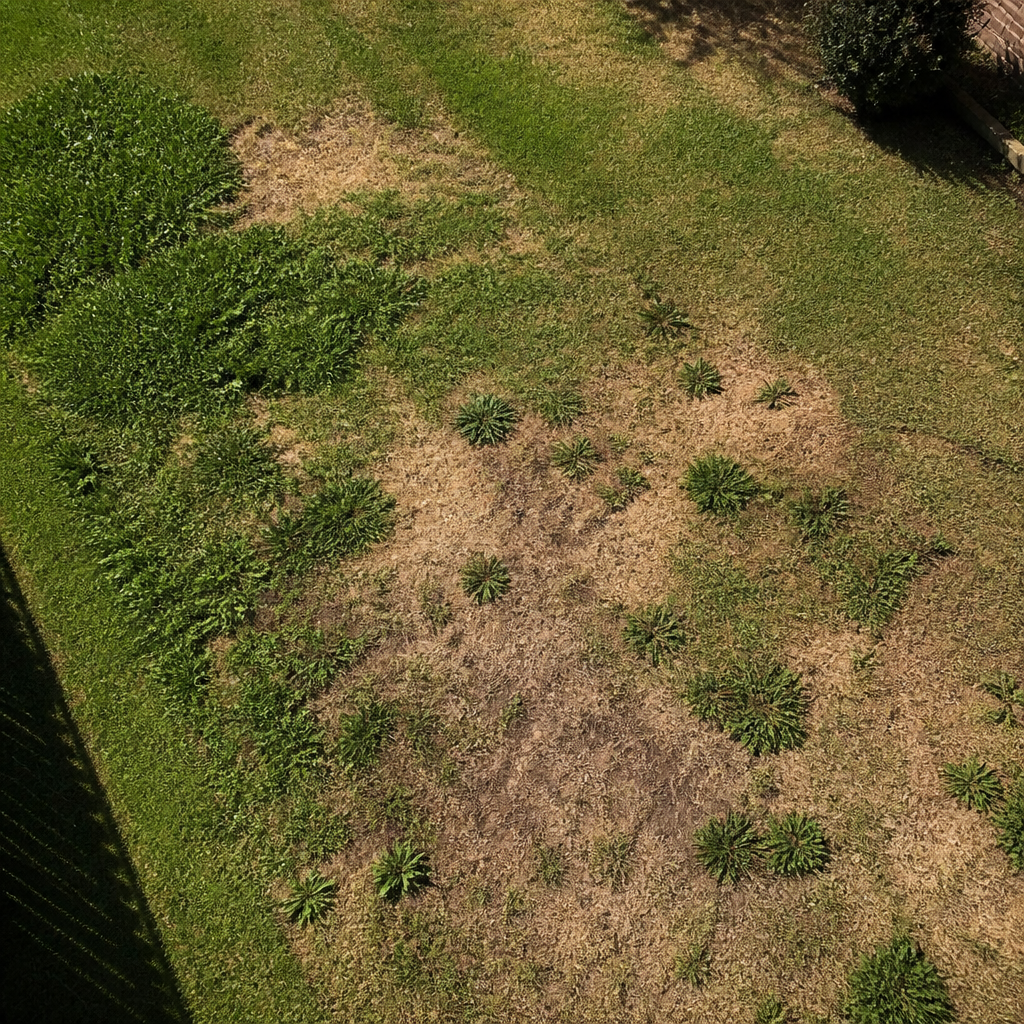
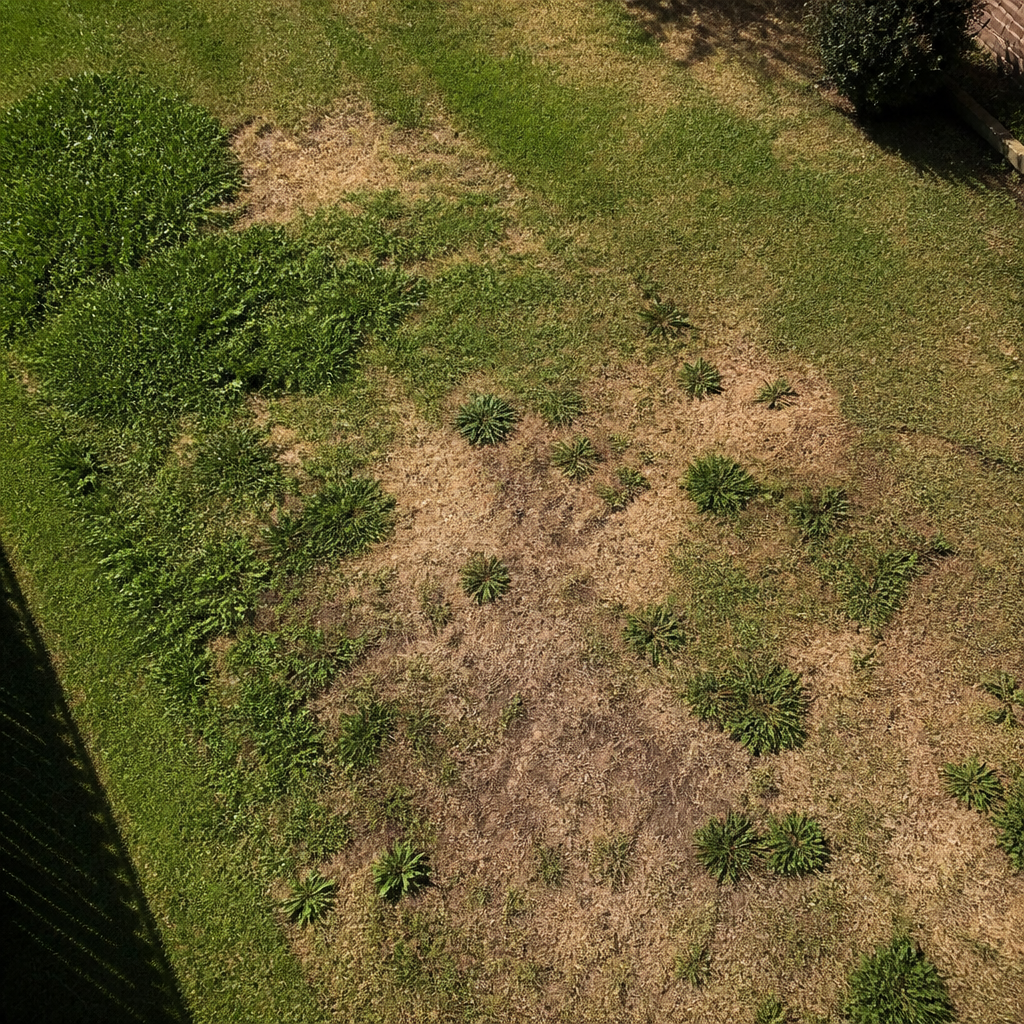
In practice, more Alabama lawns die from overwatering than from drought. Homeowners see brown patches and immediately reach for the hose, but brown patches in summer are often caused by fungal disease, which thrives in excess moisture and high humidity. Adding more water makes the problem worse, not better.
Bermuda and Zoysia lawns in Pike Road typically need about one inch of water per week during the growing season. A simple rain gauge tells you exactly how much rainfall you have already received. If you got three-quarters of an inch from rain, you only need to supplement with one quarter inch of irrigation that week.
The timing of irrigation matters as much as the volume. Watering at night in Alabama’s humid conditions leaves turf wet for eight or more hours, creating ideal conditions for brown patch fungus and dollar spot disease. Water early in the morning, ideally between 4 a.m. and 8 a.m., so the turf surface dries by mid-morning.
“Proper irrigation timing is one of the most impactful decisions a homeowner can make. Watering at the wrong time of day in humid southeastern states can undo weeks of good lawn care in just a few nights.” – Alabama Cooperative Extension System, Lawn Management Publications
Ignoring Soil Health and pH Levels
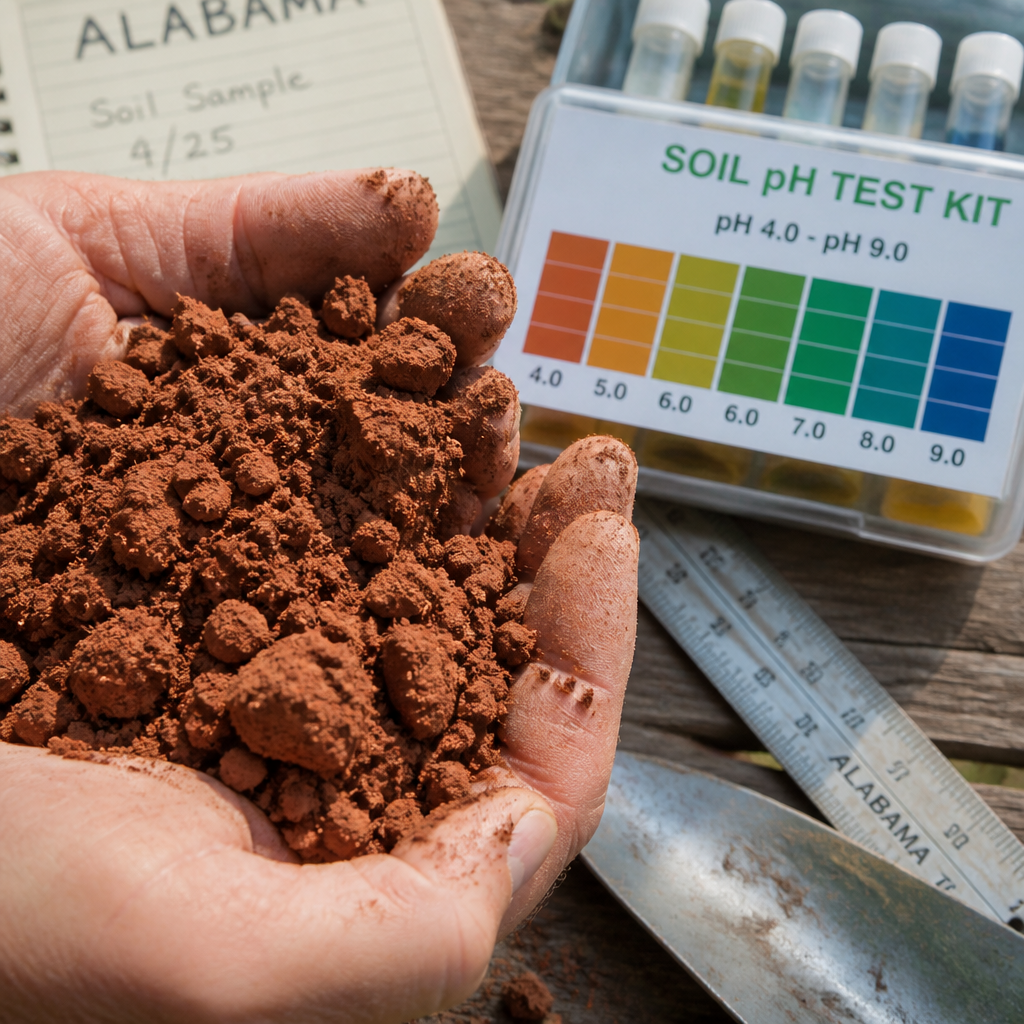
Alabama soils are naturally acidic, with pH levels frequently falling between 5.0 and 6.0. Most warm-season turfgrasses and ornamental plants perform best at a pH between 6.0 and 7.0. When soil pH is too low, essential nutrients like phosphorus, calcium, and magnesium become chemically unavailable to the plant even when those nutrients are physically present in the soil.
Homeowners who skip soil testing and apply fertilizer to acidic, unamended soil are essentially throwing money on the ground. The grass cannot absorb what it cannot access. A basic soil test through the Alabama Department of Agriculture or a county extension office costs under twenty dollars and tells you exactly how much lime to apply and which nutrients are deficient.
Lime application is the most common correction needed in central Alabama. Pelletized lime is easier to spread than agricultural lime and works within sixty to ninety days. Applying it in fall allows it to work through the soil before the spring growing season begins, setting the lawn up for much better performance from the first warm weeks of the year.
Pro tip: Test your soil every two to three years, not just when problems appear. Soil chemistry shifts gradually, and catching drift early is far less expensive than correcting a severely depleted or imbalanced soil profile.
Common Mowing Errors That Damage Turf
Mowing sounds simple until you realize that the wrong height, dull blades, and poor timing can cause as much damage as drought or disease. This is one of the most overlooked categories of common lawn care errors Alabama homeowners repeat season after season.
Cutting Too Short (Scalping)
Scalping warm-season grasses, particularly Bermuda, removes the leaf tissue the plant needs to photosynthesize and creates entry points for disease and weed seed germination. Bermuda should generally be mowed to a height between one and two inches. Zoysia performs best between one and two and a half inches. Centipede, which is particularly sensitive to scalping, should be kept between one and two inches as well.
Cutting any grass by more than one-third of its total height in a single mowing session causes immediate stress. During summer, this means mowing more frequently rather than letting turf grow tall and then cutting it down drastically.
Using Dull Mower Blades
A dull blade tears grass blades rather than cutting them cleanly. Torn grass tips turn white or brown within twenty-four hours, giving the entire lawn a dull, brownish appearance even when watered and fertilized correctly. Blades should be sharpened at least twice per season, or more frequently if you are mowing over rocky or sandy soil common in parts of central Alabama.
Skipping Edging and Trimming: Why It Matters More Than You Think
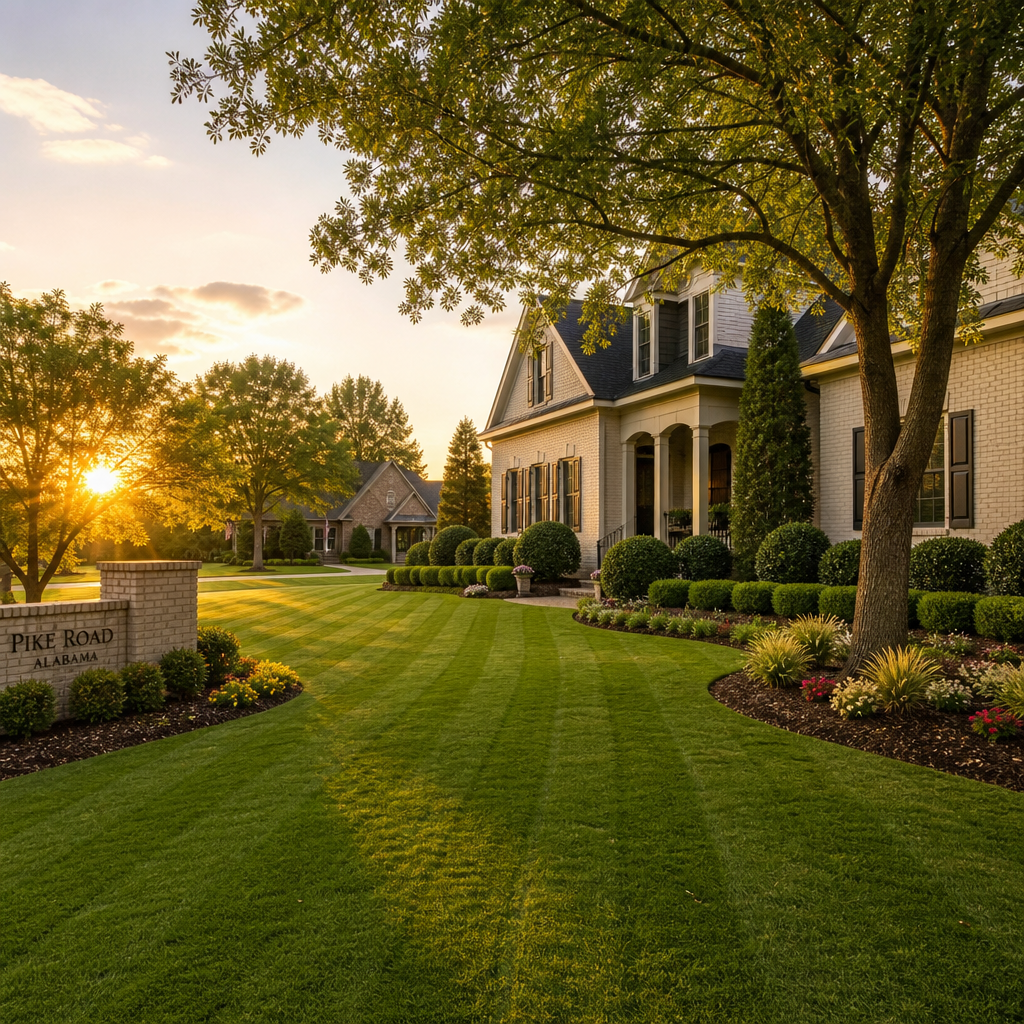
There is a clear visual difference between a lawn that has been mowed and a lawn that has been mowed, trimmed, and edged. Homeowners consistently underestimate the impact that clean edges along sidewalks, driveways, and planting beds have on the overall appearance of a property.
String trimming handles areas the mower cannot reach, such as fence lines, tree bases, and around mailbox posts. Without it, grass grows unevenly and creates a shaggy, unmaintained look regardless of how well the main lawn area is cut.
Edging along hard surfaces like driveways and sidewalks creates a sharp, defined border that signals professional-level care. Grass that creeps over pavement edges looks neglected and can eventually crack pavement by trapping moisture underneath. For homeowners in Pike Road neighborhoods where curb appeal directly affects property value, this detail is not optional.
Fertilizer Timing and Application Mistakes
Fertilizing at the wrong time is one of the most consistent common lawn care errors Alabama homeowners make, and it often does more harm than good. Applying nitrogen-heavy fertilizer in late fall to a warm-season lawn pushes tender new growth right before a freeze. That growth cannot harden off in time, and even a brief frost kills it, leaving dead patches throughout the yard.
The correct window for fertilizing warm-season grasses in central Alabama is after full green-up in spring, typically mid-April through early June, and then again in midsummer. A final light application can be made in late summer, but no nitrogen should be applied after Labor Day for most warm-season varieties.
Application rate matters just as much as timing. The data consistently shows that homeowners applying fertilizer by hand or using consumer-grade rotary spreaders without calibrating them frequently apply double or triple the recommended rate. Over-fertilization causes fertilizer burn, excessive thatch accumulation, and runoff that contaminates stormwater, which is both environmentally harmful and a waste of money.
Approach Comparison: DIY vs. Partial Service vs. Full Professional Care
| Approach | Best For | Common Risk in Alabama’s Climate |
|---|---|---|
| Full DIY Lawn Care | Homeowners with significant time, proper equipment, and willingness to research local conditions thoroughly | High risk of mowing height errors, incorrect fertilizer timing, and missed fungal disease windows during humid summer months |
| Partial Professional Service (mowing only) | Homeowners who want consistent mowing but handle fertilization and irrigation themselves | Moderate risk if homeowner makes soil or irrigation errors independently; professional mowing prevents the most visible damage |
| Full Professional Care (Waters Edge Lawn Care) | Homeowners who want reliable, year-round results without managing schedules, equipment, or seasonal timing | Lowest risk because all mowing, edging, trimming, shrub care, and seasonal cleanup are managed by professionals familiar with Pike Road conditions |
Neglecting Seasonal Cleanup in Alabama’s Transition Months
Alabama’s fall and winter transition months, roughly October through February, are not a break from lawn care. They are a critical window for setting up spring success. Homeowners who skip seasonal cleanup routinely spend significantly more money repairing damage the following April than they would have spent on a single fall cleanup service.
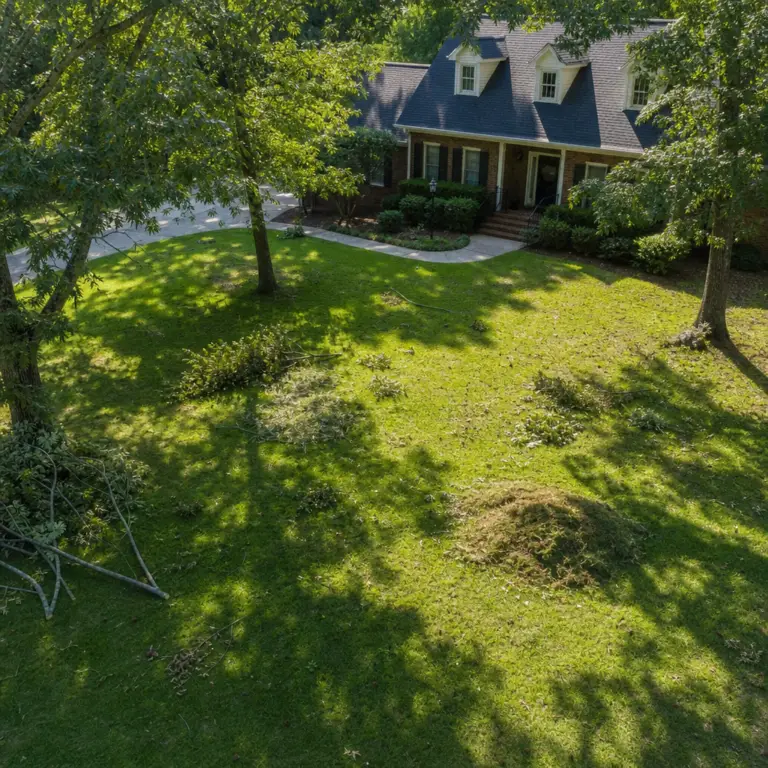
Leaf accumulation is the most common problem. A thick layer of leaves left on turf through winter blocks sunlight and air circulation, creating conditions where turf suffocates and fungal diseases establish themselves in the thatch layer beneath. When spring arrives, these areas produce bare, thin patches that require overseeding, topdressing, or sod repair.
Debris cleanup around shrub beds and tree bases is equally important. Piles of organic matter at the base of ornamental plants trap moisture against the crown, causing crown rot. Removing this material in fall protects both the plant’s root system and the soil structure around it going into winter.
Pro tip: In Pike Road and surrounding neighborhoods, scheduling a professional seasonal cleanup in early November captures the majority of leaf fall before winter and positions your lawn for faster green-up the following spring. The timing difference of two to three weeks significantly affects how clean the process is.
Improper Shrub Planting and Tree Trimming Errors
Shrub planting mistakes in Alabama typically come down to two issues: planting too deep and planting too close together. The root flare of a shrub or tree should be visible at or just above the soil surface. Burying the flare creates anaerobic conditions around the base, promoting root rot even in well-drained soil. This is a slow process that can take two to three growing seasons to kill a plant, which means homeowners rarely connect the death of a shrub to how it was originally installed.
Spacing Mistakes That Cost Money Later
Homeowners frequently plant shrubs based on how they look at purchase, which is often twelve to eighteen inches tall. The same shrubs reach six to ten feet at maturity. Planting them eighteen inches apart creates an overcrowded bed within five years that requires removal and replanting, a far more expensive correction than simply reading the mature size tag before installation.
Tree Topping and Improper Pruning Cuts
Tree topping, which is the practice of cutting back large limbs to stubs to reduce height, is one of the most damaging landscaping mistakes Alabama property owners commit. According to arborist standards established by the International Society of Arboriculture, topping removes the majority of a tree’s canopy, forces multiple weak sprouts at the cut sites, and leaves large wounds that cannot compartmentalize properly. The result is a structurally weaker tree that grows back faster and denser than before, requiring more aggressive management every few years.
Proper tree trimming requires clean cuts made just outside the branch collar, the slightly swollen tissue where a branch meets the trunk or parent branch. This technique preserves the tree’s natural wound response and reduces long-term decay significantly.
Frequently Asked Questions
What is the most common landscaping mistake Alabama homeowners make?
The most common mistake is choosing plants that are not adapted to Alabama’s humid subtropical climate, particularly cool-season grasses that cannot survive the summer heat in central Alabama communities like Pike Road. The second most common issue is overwatering combined with nighttime irrigation, which creates persistent fungal disease problems throughout the growing season.
What landscaping tips for Pike Road specifically should homeowners know?
Pike Road homeowners should prioritize warm-season turfgrasses like Bermuda or Zoysia, test their soil annually because central Alabama soils are naturally acidic, schedule irrigation for early morning hours to reduce fungal risk, and invest in consistent edging along driveways and sidewalks to maintain the clean curb appeal that is standard in this community. Seasonal cleanup in fall is also particularly important given the tree cover in many Pike Road neighborhoods.
How often should Alabama lawns be fertilized?
Warm-season lawns in Alabama should receive two to three fertilizer applications per year, starting after full green-up in mid-spring, again in midsummer, and optionally a light feeding in late summer. No nitrogen fertilizer should be applied after Labor Day for most warm-season grasses. Skipping fall fertilization protects turf from freeze damage caused by tender new growth that cannot harden before temperatures drop.
Is overwatering really worse than underwatering for Alabama lawns?
In Alabama’s climate, yes. The high humidity already creates favorable conditions for fungal disease, and overwatering amplifies that risk dramatically. Established warm-season lawns are surprisingly drought-tolerant and will go dormant rather than die under moderate drought stress. Brown patches that appear during summer are far more likely to be fungal disease exacerbated by excess moisture than actual drought damage.
When is the best time to trim shrubs and trees in Alabama?
Most ornamental shrubs in Alabama should be pruned in late winter before new growth begins, typically in February or early March. Spring-blooming shrubs like azaleas should be pruned immediately after flowering to avoid cutting off next season’s buds. Tree trimming can be done year-round for dead or hazardous branches, but major structural pruning is best performed in late winter when the plant is dormant and wound healing is less complicated by active insect and disease pressure.
How can I tell if my lawn has a fungal disease rather than a drought problem?
Fungal disease typically presents as circular or irregular patches with a distinct edge, often with a brown or tan center and a slightly darker or yellowish ring around it. Drought stress usually causes uniform thinning and browning across the lawn, particularly in areas with lighter soil or more sun exposure. If you have been watering regularly and still see expanding brown circles, fungal disease is the likely culprit, and additional irrigation will worsen the problem.
If you have dealt with any of these landscaping mistakes in your Pike Road yard or have questions about what actually works in Alabama’s climate, share your experience in the comments or reach out directly for a free quote from Waters Edge Lawn Care.
We would love your feedback and any insights you would share with others. What perspective would you add?
References
- Alabama Cooperative Extension System – Lawn and Garden management resources for Alabama homeowners
- International Society of Arboriculture – Authoritative standards for tree pruning, trimming, and tree care best practices
- U.S. Environmental Protection Agency WaterSense Program – Research and guidelines on efficient landscape irrigation
- Statista – Landscaping industry data and homeowner spending statistics for residential lawn care in the United States
- Forbes Home – Consumer research and cost analysis on professional landscaping services and return on investment for homeowners