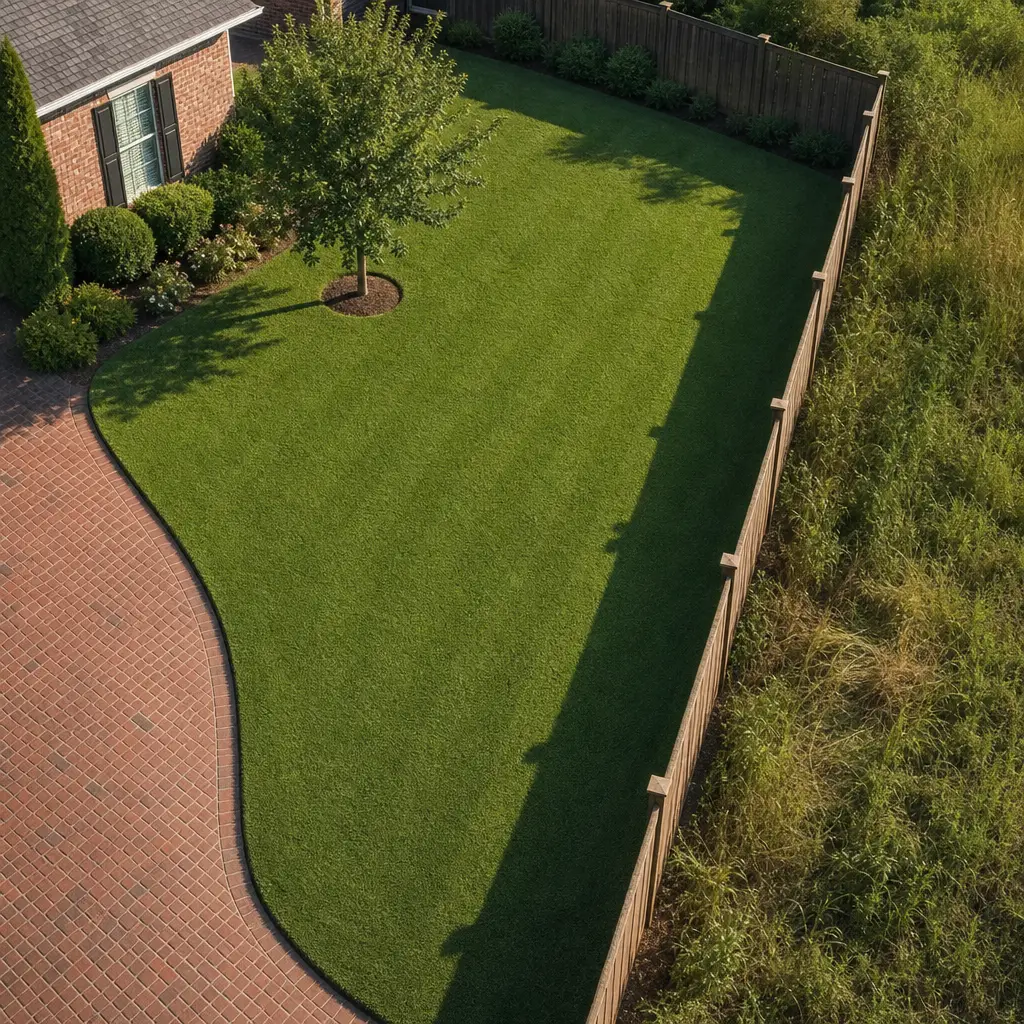
Most homeowners in Pike Road, Alabama obsess over their mowing schedule but completely ignore the edges. That is a mistake. String trimming lawn care is not a finishing touch. It is half the job. A lawn mowed to perfection with ragged, overgrown edges still looks neglected. In practice, the difference between a yard that impresses neighbors and one that just looks maintained comes down to the quality of the trim work. This guide breaks down why string trimming deserves equal priority and how to approach it correctly, especially in Alabama’s demanding climate.
Table of Contents
- Quick Takeaways
- Why String Trimming Is Not Optional
- What Happens to Alabama Lawns Without Regular Trimming
- Weed Trimming Alabama: The Local Challenge
- Lawn Trimming Around Obstacles in Pike Road
- String Trimmer Types Compared
- Common Mistakes Homeowners Make With String Trimming
- When to Hire a Professional for String Trimming
- Frequently Asked Questions
- References
Quick Takeaways
| Key Insight | Explanation |
|---|---|
| Trimming completes the mowing job | Mowers cannot reach fence lines, tree bases, or curb edges. A string trimmer fills those gaps and defines the yard’s shape. |
| Alabama’s heat accelerates overgrowth | Warm-season grasses like Bermuda and Zoysia grow aggressively in Alabama summers, meaning untrimmed edges can look unkempt within days. |
| Scalping is a real and damaging risk | Holding a string trimmer at the wrong angle removes too much grass and exposes bare soil, inviting weeds and disease. |
| Obstacles require deliberate technique | Mailboxes, sprinkler heads, A/C units, and decorative rocks in Pike Road yards all require slowing down and adjusting trimmer angle to avoid damage. |
| Frequency matters more than equipment | A basic battery-powered trimmer used every mow beats an expensive gas trimmer used once a month. Consistency is what produces clean results. |
| String trimming supports weed control | Regular trimming along fence lines and garden beds removes the seed heads of weeds before they spread across the rest of the lawn. |
| Professional trimming saves time and protects property | Experienced crews know how to trim near irrigation systems, ornamental plants, and hardscape without causing costly damage. |
Why String Trimming Is Not Optional
String trimming is the detail work that defines whether a yard looks professionally maintained or just occasionally mowed. A rotary mower cuts the open field of a lawn efficiently, but it physically cannot navigate the six inches of grass growing against a fence post, around a mailbox base, or along a concrete driveway edge. Those zones get left behind every single time you mow, and they accumulate fast.
The University of Georgia Cooperative Extension has documented that warm-season grasses common to central Alabama, including Bermuda grass and Zoysia, can grow at rates exceeding one inch per week during peak summer months. At that rate, skipping trim work even twice means visible overgrowth along every edge and obstacle in the yard.
String trimming lawn care also serves a functional purpose beyond aesthetics. Dense, untrimmed grass along walkways and driveways traps moisture, which creates ideal conditions for fungal issues and insect harborage. Trimming regularly eliminates that environment before it becomes a problem.
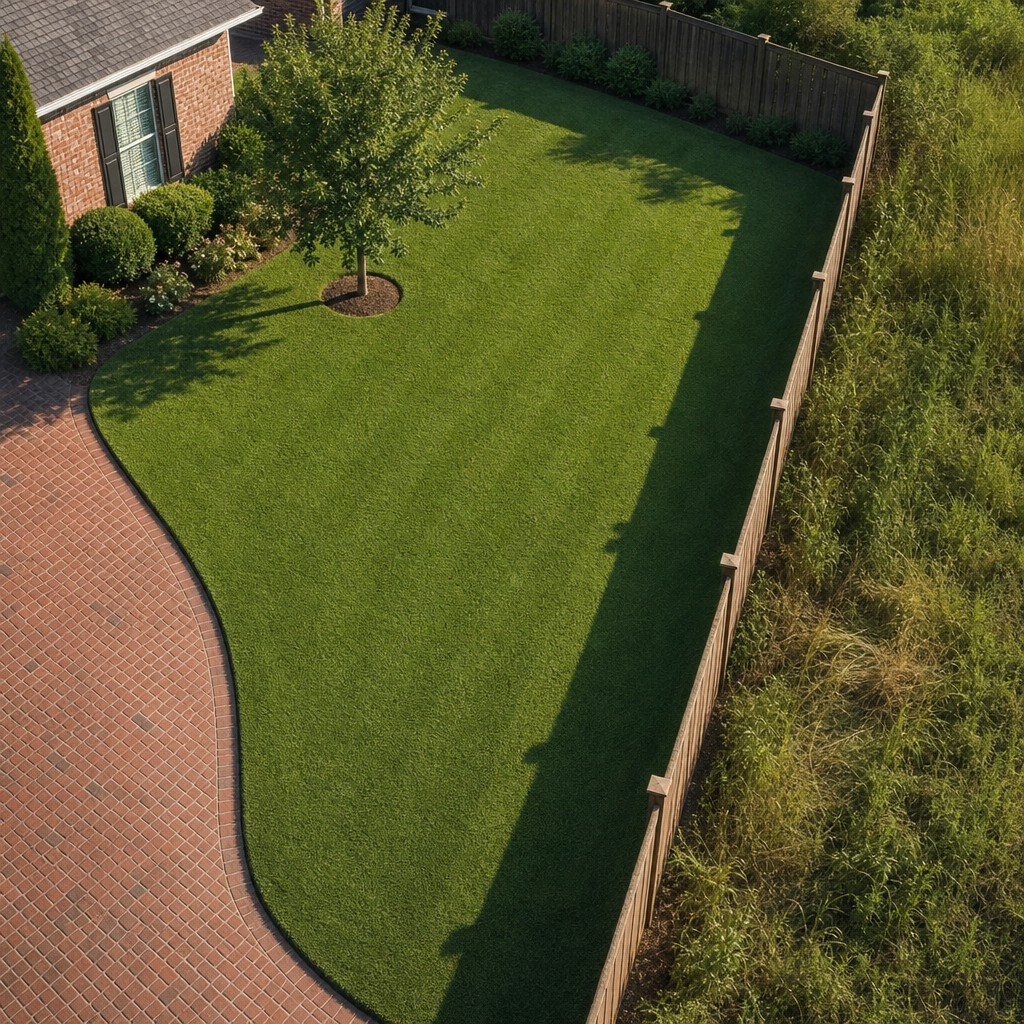
For homeowners in Pike Road and Montgomery-area neighborhoods, this is not a seasonal concern. The growing season in central Alabama runs from roughly March through October, and a lawn that looks sharp requires consistent trim work throughout that entire window.
Pro tip: Always string trim before you blow off clippings, not after. Trimming first lets you collect all debris in one final pass, which keeps the driveway and walkways cleaner.
What Happens to Alabama Lawns Without Regular Trimming
The consequences of skipping string trimming are more serious than most homeowners expect. In Alabama’s humid subtropical climate, overgrown edges are not just an eyesore. They create real turf health problems that take effort and money to reverse.
Edge Creep Into Hardscape
Bermuda grass is particularly aggressive. Without regular trimming along driveways, sidewalks, and patio borders, it sends runners directly into cracks and over the surface of hardscape. Once Bermuda establishes itself in a concrete joint or between pavers, removal requires herbicide treatment or manual excavation. Preventing it with a trimmer takes seconds. Fixing it takes considerably more.
Weed Seed Distribution
Weeds that are allowed to reach the seed-head stage along untrimmed fence lines and garden bed borders disperse thousands of seeds across the lawn with every wind event. A common mistake is treating weeds in the open turf while leaving the perimeter untrimmed. The untrimmed perimeter reseeds the treated area within weeks. Regular weed trimming in Alabama cuts weeds before they can complete that cycle.
Pest and Moisture Accumulation
Thick, untrimmed grass along the foundation of a home retains moisture and provides cover for pests including fire ants, which are an active concern throughout the Montgomery and Pike Road area. Keeping edges trimmed tight reduces harborage and allows the soil surface to dry properly after rain events.
Weed Trimming Alabama: The Local Challenge
Alabama presents a specific set of challenges for weed management through trimming. The state’s warm, humid conditions support aggressive weed species that grow faster and recover more quickly after cutting than their counterparts in cooler climates. Homeowners who manage their own trimming need to understand what they are dealing with.
The most problematic species in central Alabama include crabgrass, nutsedge, Florida betony (also called rattlesnake weed), and common bermudagrass invading ornamental beds. Weed trimming in Alabama is most effective when performed on a 7-to-10-day cycle during the growing season. Waiting longer than two weeks allows most of these species to reach a height where the stem is woody and the trimmer line is less effective at a clean cut.
“Proper mowing and trimming practices, including correct height and frequency, remain the most effective cultural tools for reducing weed pressure in residential turf.” – Alabama Cooperative Extension System, Home Lawn Care Guidelines
Along fence lines, weed trimming also controls species like wild grape, Virginia creeper, and poison ivy that establish in the unmaintained zone between the turf edge and the fence structure. These are not just aesthetic problems. Poison ivy in particular poses a direct health risk to anyone working in that area.
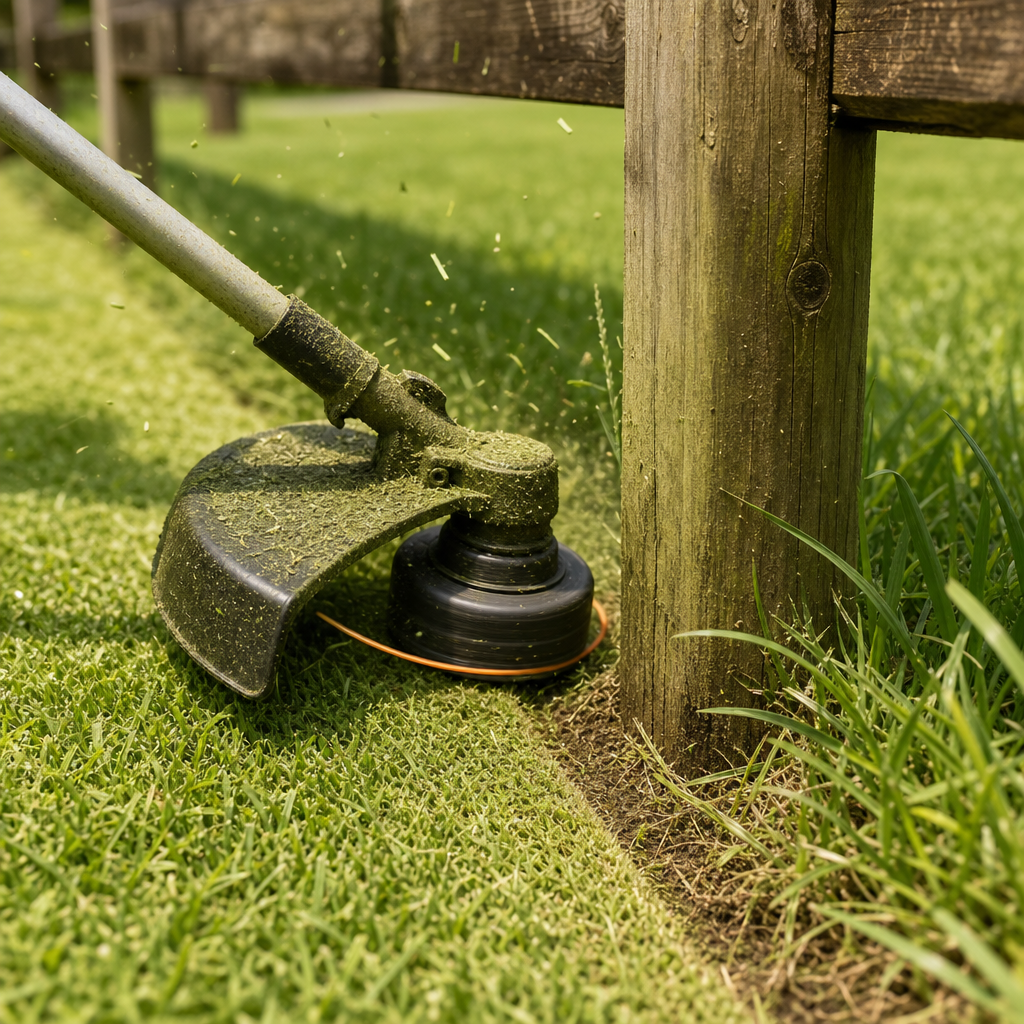
Pro tip: When trimming along fence lines, work with the string trimmer head angled slightly toward the fence rather than parallel to it. This cuts the grass closer to the base of the fence post without wrapping line around the post and breaking it.
Lawn Trimming Around Obstacles in Pike Road
Pike Road residential properties tend to feature a consistent set of landscape elements that require careful string trimming technique. Suburban lots in this area typically include concrete or brick mailbox bases, above-ground irrigation heads, heat pump and A/C condenser units, landscape boulders, ornamental tree rings, and wooden or vinyl fence lines. Each of these obstacles presents its own trimming challenge.
Trimming Around Irrigation Heads
This is the area where homeowners most frequently cause expensive damage. Striking a pop-up irrigation head with a spinning trimmer line can crack the housing or shear the riser, resulting in a repair call that costs far more than a lawn service visit. The correct approach is to reduce trimmer speed when working within 12 inches of a known irrigation head and use a sweeping motion that keeps the line from making direct contact with the head housing.
Trimming Around Trees and Ornamental Plantings
A practice called “mower blight” or “string trimmer damage” is one of the most documented causes of tree decline in residential landscapes. The Alabama Forestry Commission has noted that repeated bark damage at the base of young trees from string trimmers and mower decks is a leading cause of tree death in suburban settings. The proper technique is to maintain a mulched ring around every tree base that keeps the trimmer away from the bark entirely. If no mulch ring exists, the trimmer operator must maintain enough distance to avoid bark contact.
Trimming Along Hardscape Borders
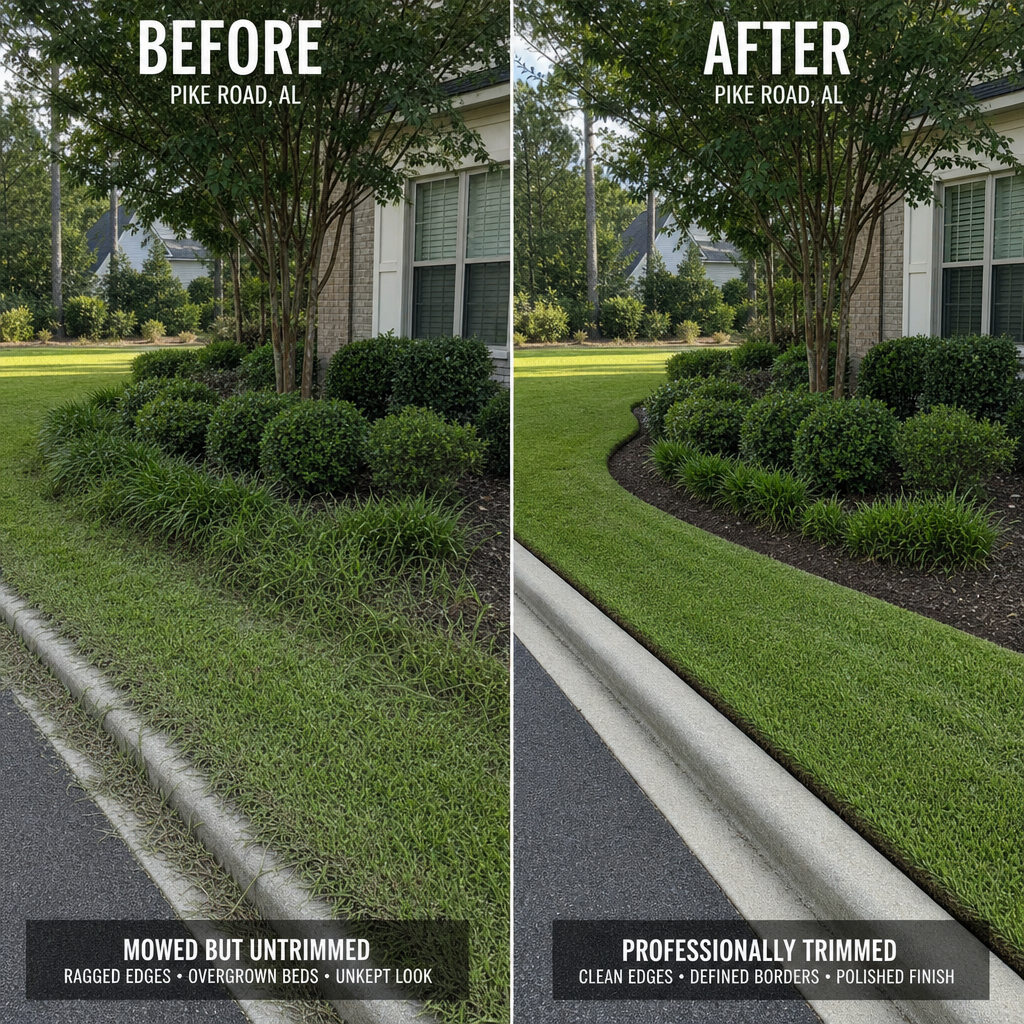
For lawn trimming around obstacles in Pike Road, the most consistent rule is to keep the trimmer head vertical, not angled, when working along concrete edges. A vertical head position creates a clean, defined edge rather than a scalped slope. It also prevents the line from striking the concrete surface and wearing down prematurely.
String Trimmer Types Compared
The equipment choice matters, but not as much as consistent use and correct technique. That said, choosing the right tool for a residential Pike Road property does make the job faster and more precise. Here is a direct comparison of the three main options available to homeowners and lawn care professionals.
| Trimmer Type | Best Use Case | Key Limitation |
|---|---|---|
| Gas-Powered String Trimmer | Large properties with heavy weed growth, extended run time needed, commercial-grade workload | Heavier, noisier, requires fuel mixing and regular carburetor maintenance. Overkill for standard suburban lots. |
| Battery-Powered String Trimmer | Standard residential lots up to half an acre, homeowners who prioritize low maintenance and quiet operation | Battery life limits run time. High-end models (40V or 80V) can match gas performance but cost more upfront. |
| Corded Electric String Trimmer | Small urban yards where power outlets are accessible, light maintenance around garden beds | Extension cord limits range and creates a tripping hazard. Not practical for most Pike Road lot sizes. |
For most residential properties in Pike Road, a 40V or 56V battery-powered trimmer from manufacturers like EGO or Greenworks provides enough power for Bermuda and Zoysia control without the maintenance overhead of a gas engine. Professional lawn care crews typically use commercial-grade gas trimmers because they are servicing multiple properties back-to-back where battery swap time adds up.
Common Mistakes Homeowners Make With String Trimming
In practice, the majority of trimming errors come down to a handful of repeated habits. Recognizing and correcting these saves time, protects the lawn, and produces cleaner results immediately.
Trimming Too Infrequently
Waiting three or four weeks between trims and then attempting to cut down six inches of overgrowth in one pass is damaging to the grass and hard on the equipment. It also produces poor results because the trimmer line is not designed for heavy removal. Weekly or bi-weekly trimming keeps grass at a manageable height and produces clean, consistent edges.
Using the Wrong Line Diameter
Residential trimmers work best with 0.080-inch to 0.095-inch diameter line for standard grass. Using a thinner line on Alabama’s dense warm-season grasses causes the line to break constantly. Using a thicker line on a low-powered motor bogs it down. Match the line diameter to both the trimmer’s power rating and the density of the vegetation being cut.
Scalping at Fence Lines
A common mistake is angling the trimmer head downward while working along a fence, removing too much grass and leaving bare soil exposed. Bare soil along fence lines is an open invitation for weed germination. The head should stay level with the top of the grass canopy, not below it.
Ignoring Safety Equipment
The National Institute for Occupational Safety and Health (NIOSH) reports that string trimmers are a significant source of eye injuries and lower-leg lacerations in outdoor power equipment incidents. Eye protection and closed-toe shoes are not optional when operating a string trimmer. Debris ejection can occur at speeds exceeding 200 miles per hour.
When to Hire a Professional for String Trimming
There are clear situations where hiring a professional lawn care company is the smarter choice over handling trimming yourself. The question is not about ability. It is about risk, time, and quality of result.
If the property has multiple ornamental trees without established mulch rings, several irrigation zones with pop-up heads throughout the lawn, or significant hardscape borders where scalping damage would be visible and costly to repair, professional crews who perform this work daily will produce better results with lower risk of damage.
Waters Edge Lawn Care serves Pike Road, Alabama and surrounding areas with precision lawn mowing, string trimming, and edging services as part of complete lawn maintenance packages. The value of a professional service is not just the labor saved. It is the expertise applied around every obstacle, edge, and ornamental feature without the homeowner managing the risk personally.
For properties with seasonal time constraints, hiring out trimming also prevents the common pattern of letting trim work fall behind during busy weeks, then dealing with overgrown edges that require double the effort to restore. Consistent professional service eliminates that cycle entirely.
Pro tip: When evaluating lawn care companies in the Pike Road area, ask specifically how they handle trimming near irrigation heads and young trees. A company that does not have a clear answer to that question is likely causing damage on every property they service.
Frequently Asked Questions
How often should I string trim my lawn in Alabama?
During the active growing season from March through October, string trimming should match your mowing frequency, which for most warm-season grasses in Alabama means every 7 to 14 days. During cooler months, the interval can extend to every 3 to 4 weeks depending on growth rate. Trimming less frequently than you mow guarantees visible overgrowth at every edge and obstacle.
Can string trimming damage my lawn if done incorrectly?
Yes, and the damage can be significant. Scalping from incorrect trimmer angle removes the green leaf tissue and exposes bare soil, which dries out quickly and becomes a prime zone for weed germination. Striking tree bases repeatedly causes permanent bark damage that can kill trees over one to three years. Using a trimmer on wet grass increases clumping and produces uneven cuts that brown at the tips within a day.
What is the correct trimmer angle for cutting near a sidewalk or driveway?
Hold the trimmer head vertical so the cutting line runs perpendicular to the ground when working along a concrete or asphalt edge. This creates a defined, clean cut edge rather than a sloped one. A vertical head position also prevents the spinning line from striking the hard surface and breaking prematurely, which saves line and produces a more consistent finish.
Is weed trimming in Alabama different from other states?
Practically speaking, yes. Alabama’s warm-season grasses and the weed species they compete with grow more aggressively and recover faster than cool-season turf environments. Species like nutsedge and Florida betony are difficult to cut cleanly and regrow quickly from their root structures. Regular trimming prevents them from reaching seed-head stage, which is the most important control measure available without herbicide application.
What should I look for in a professional string trimming service near Pike Road?
Look for a company that includes string trimming as a standard part of every visit, not as an add-on. Ask whether they trim before or after blowing, how they handle irrigation head zones, and whether they maintain defined edges along driveways. A crew that treats trimming as an afterthought will produce inconsistent results. Waters Edge Lawn Care builds trimming into every service visit and treats edge definition as a non-negotiable part of a finished lawn.
Does string trimming help with fire ant control in Alabama?
Trimming does not eliminate fire ants, but it reduces one of the conditions they prefer. Fire ants in Alabama establish mounds more readily in dense, unmowed vegetation and along untrimmed fence lines where soil disturbance is low and cover is high. Keeping these zones trimmed short reduces harborage and makes mound locations easier to spot and treat before the colony grows large.
If you handle your own lawn trimming in Pike Road or surrounding neighborhoods, share what has worked for you or what obstacles give you the most trouble.
We would love your feedback and any insights you would share with others. What perspective would you add?
References
- Alabama Cooperative Extension System, home lawn care and turfgrass management research for Alabama homeowners
- National Institute for Occupational Safety and Health, outdoor power equipment safety data and injury prevention guidelines
- Alabama Forestry Commission, tree health and residential landscape protection resources for Alabama property owners
- University of Georgia Cooperative Extension, warm-season turfgrass growth rates and lawn management guidance for the southeastern United States
- Statista, lawn care industry data including service frequency trends and homeowner spending on professional lawn maintenance