Every October, the same question comes up on our mowing routes: should we bag the clippings this fall, or let them drop back into the grass? Homeowners around Pike Road and across central Alabama have strong opinions, usually shaped by what the neighbor does. For grass clippings fall Alabama lawns, the answer depends less on tradition and more on what your turf is doing right now. Cooler weather slows growth, leaves start piling up, and some lawns need a clean surface for the work ahead. Here is how we decide, and where mulching still beats bagging even late in the season.
Table of Contents
- Quick Takeaways
- What Clippings Return to Your Soil
- When Mulching Makes Sense This Fall
- When Bagging Is the Better Call
- Choosing Between Mulching, Bagging, and a Hybrid Schedule
- Pike Road Lawns: Mowing Schedules Through Late Fall
Pike Road lawns are rarely uniform. A shaded yard under mature trees often drops leaves earlier and more heavily than an open lot a few streets away, so the right setup for one property may not fit its neighbor. Walk each yard before you choose a method, and look at where the leaves collect and where the grass is still thick.
Slowing Growth in Cooler Weeks
As nights cool, warm-season turf grass slows down, and many homeowners stretch the time between mowings. That is reasonable for the grass, but it becomes a trap for clippings. When you go from weekly cuts to every two weeks, each pass removes more blade and creates larger clumps. Adjust the schedule so each pass stays within the one-third rule, even if that means mowing a little more often than you expected.
Shaded Yards and Leaf Timing
Shaded lots usually need bagging sooner than sunny lawns. Leaves reach the turf faster, and cooler, shadier conditions slow drying, so a mat forms more quickly. Check the yard after each windy stretch, and decide whether the next cut should be mulched or bagged. A single rule for the whole season will fail one of your two lawns.Bagging Costs, Disposal, and Hauling Time
- Mower Setup for Fall Mulching
- Frequently Asked Questions
- References
Quick Takeaways
| Key Insight | Explanation |
|---|---|
| Mulch while the grass is still growing | Clippings return nitrogen, potassium, and phosphorus as they break down, which helps while the turf is still actively growing. |
| Never remove more than one third of the blade | Cutting only the top third keeps clippings short enough to settle into the canopy instead of forming clumps. |
| Bag during overseeding and disease treatment | A heavy layer of clippings can keep new seed damp and out of light, and it can carry disease across a lawn. |
| Switch to bagging once leaves join the clippings | A layer of wet leaves under grass blades blocks light and dries slowly, which is when most fall lawns start to suffer. |
| Mow on a steady schedule | Waiting too long lets clippings build into thatch. Mowing every 5 to 10 days keeps each cut light. |
| Sharpen blades before the season winds down | Dull blades tear grass and leave brown, ragged tips that make a lawn look stressed for weeks. |
What Clippings Return to Your Soil
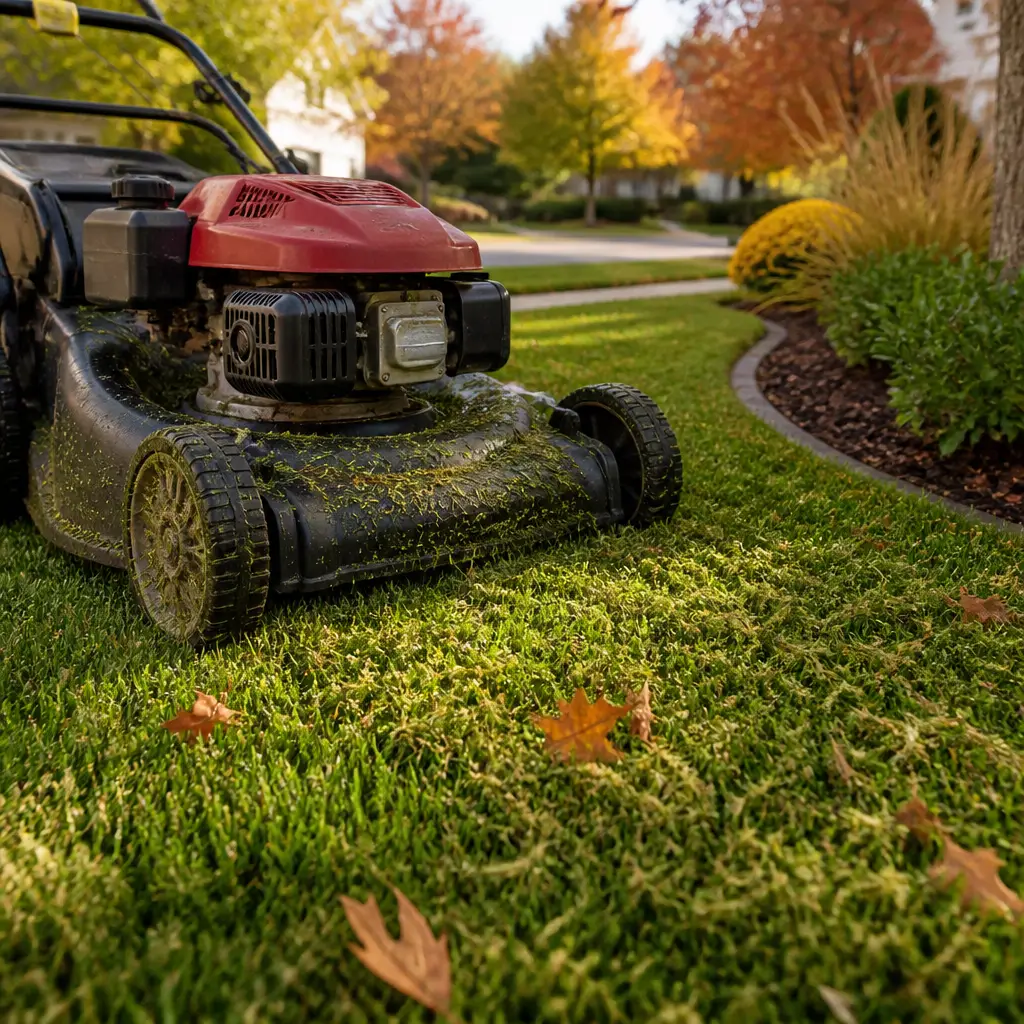
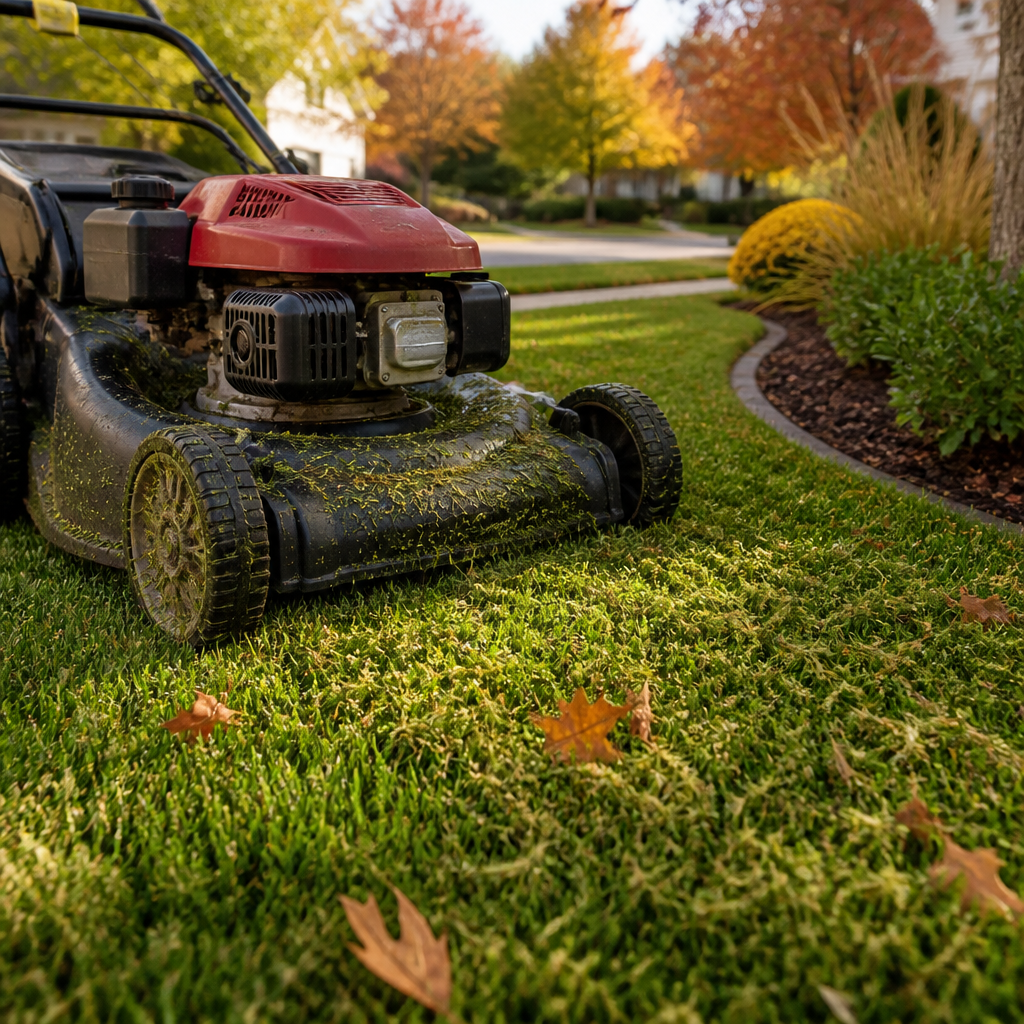
Mulching grass clippings follows the lawn’s natural cycle. The cut tips fall to the soil, break down in the warmth, and return moisture and nutrients to the root zone. Bagging interrupts that cycle by pulling the material off the property entirely. For most lawns, the choice comes down to whether you want that free return or a cleaner look at the end of each cut.
Nitrogen, Potassium, and Phosphorus From the Blades
As clippings decompose, they release nitrogen, potassium, and phosphorus, the same nutrients your lawn normally draws from fertilizer. Wright Manufacturing’s guide on mulching makes this point directly. In a fall program where you may already be feeding less, that free return matters. Clippings do not replace a proper fertility plan, but they can reduce how much you need to buy.
Why Thatch Is the Real Risk
The downside of mulching is rarely the clippings themselves. The problem is volume and timing. The same guide advises keeping a reasonable mowing height and mowing frequently so clippings do not turn into a thick thatch layer. Thatch is the mat that forms when material builds up faster than it breaks down, and it is the main reason mulching goes wrong.
Clippings are free fertilizer only while they are small enough to disappear into the canopy. Once they form a mat, you are growing a problem instead of a lawn.
When Mulching Makes Sense This Fall
Mulching works when every cut removes only a small slice of the blade. Our rule on the route is simple: no more than one third of the grass blade in a single pass. That keeps the clippings short and light enough to break down quickly, even when the weather turns cool. If you cannot keep to that rule, the grass has grown too long between mowings, and the clippings will stack up no matter how you handle them.
Mowing Often Enough to Keep Clippings Short
LawnStarter’s mulching guide recommends mowing every 5 to 10 days and cutting only dry grass. Both habits keep clippings small. In the cooler weeks of fall, growth slows, so you may find yourself mowing less often. That is fine, but each cut will remove more blade, so raise the deck slightly instead of letting the grass run long.
Sharp Blades and Dry Grass Make the Difference
Dull blades tear rather than cut, which leaves frayed, brown tips that make the lawn look sick for a week or two. Wet grass is the other common failure. Damp clippings clump under the deck and block the discharge, and that turns a mulching mower into a bagging chore without you noticing. Wait until the dew has burned off before you start.
The Mulching Plug and Discharge Setup
Most rotary mowers can mulch if you close the side discharge opening and fit a mulching plug. Check that the plug is seated tightly before you start, then mow the whole lawn in one pass so the clippings spread evenly. Overlapping passes stack material in the same spots and create the clumps that homeowners complain about in November.
Pro tip: Mow a short strip first, then walk behind the mower and look at the path. If you see clumps, the grass is too tall or too wet, so raise the deck or wait a few hours before you mow again.
When Bagging Is the Better Call
Bagging is not the enemy of a healthy lawn. There are fall situations where removing the clippings is the better call, and an experienced crew recognizes them at a glance. The trick is knowing which conditions to watch for before the problem shows up in the grass.
Overseeding and New Seed Beds
If you are overseeding or establishing new turf, do not mulch heavy clippings onto the seed. A thick layer blocks light and keeps the soil surface wet, which slows germination and can leave seedlings patchy. Bag the early cuts after seeding, then return to mulching once the new grass is established and mowing regularly.
Fungal Disease and Wet Weather Patterns
LawnStarter’s comparison notes that bagging is the better tactic when a lawn needs a major intervention, such as treating a fungal disease. Clippings from diseased turf can carry the problem to healthy areas, and wet material left on a sick patch holds moisture against the blades. Bag the affected areas, then dispose of that material away from the lawn.
Leaves Mixed Into the Clippings
Leaves are the real reason many fall lawns need bagging. A few leaves can go through the mower with the grass, but a heavy drop creates a layer that smothers turf. Once you can see more leaves than grass blades on the surface, switch to bagging for that pass. Wet leaves are the worst offender because they mat quickly and dry slowly.
Pro tip: Run one pass with the bag on over the worst leaf-heavy area, then switch back to mulching. You remove the mat without hauling away every clipping on the property.
Choosing Between Mulching, Bagging, and a Hybrid Schedule
Most lawns do not need one answer for the entire season. A yard that is mulched in early October can need bagging by late November, especially after a windy week drops leaves. The smartest approach is to decide cut by cut, using the conditions in front of you rather than a calendar date. Here is how the three main approaches compare.
Comparing the Three Approaches
| Approach | Best Fit | Main Trade-off |
|---|---|---|
| Mulch every cut | Established turf mowed regularly with sharp blades and dry grass | Clippings show on the surface, and infrequent mowing turns them into clumps |
| Bag every cut | New seedings, disease treatment, and heavy leaf drop | Adds mowing time, bag changes, and disposal work for every visit |
| Seasonal hybrid | Most yards from October through December | Requires checking the lawn on every visit and changing the setup when conditions shift |
Why the Hybrid Approach Wins for Most Yards
The hybrid approach asks more of you, but it matches what the lawn needs. Early in fall, while growth is still active, mulching feeds the turf and saves time. Once leaves drop heavily or you overseed, switch to bagging until the pressure passes. Homeowners who treat it as a checklist rather than a rule tend to get the best results from both methods.
Pike Road Lawns: Mowing Schedules Through Late Fall
Pike Road lawns are rarely uniform. A shaded yard under mature trees often drops leaves earlier and more heavily than an open lot a few streets away, so the right setup for one property may not fit its neighbor. Walk each yard before you choose a method, and look at where the leaves collect and where the grass is still thick.
Slowing Growth in Cooler Weeks
As nights cool, warm-season turf grass slows down, and many homeowners stretch the time between mowings. That is reasonable for the grass, but it becomes a trap for clippings. When you go from weekly cuts to every two weeks, each pass removes more blade and creates larger clumps. Adjust the schedule so each pass stays within the one-third rule, even if that means mowing a little more often than you expected.
Shaded Yards and Leaf Timing
Shaded lots usually need bagging sooner than sunny lawns. Leaves reach the turf faster, and cooler, shadier conditions slow drying, so a mat forms more quickly. Check the yard after each windy stretch, and decide whether the next cut should be mulched or bagged. A single rule for the whole season will fail one of your two lawns.
Bagging Costs, Disposal, and Hauling Time
Bagging is not free, even though the clippings are. The costs show up in time, labor, and disposal, and they add up across a full fall season. Understanding them helps you decide whether a bagging day is worth it or whether you can accept a lighter, mulched look for another week.
What Bagging Really Costs You
LawnStarter’s comparison puts mulching at roughly 30 to 38 percent less time than bagging, and it notes that bagging can raise mowing fees by up to 50 percent for professional service. For a homeowner, the cost appears as weekend hours, emptying bags mid-cut, and the extra stops to dump full bags. Those minutes are why many people skip bagging until the lawn truly needs it.
Where the Clippings Go
Wright Manufacturing points out that clippings are organic matter that decompose quickly, while the plastic bags used to collect them do not. If you bag, consider composting the clippings in a dedicated pile rather than sending them to the curb in plastic. Keep the pile away from the lawn edges and bed lines so seed heads do not spread into the turf you are trying to protect.
Mower Setup for Fall Mulching
Your mower decides whether fall mulching works. Before the last few cuts of the season, check the deck, the blades, and the discharge path. A ten-minute inspection saves hours of raking and keeps the lawn looking like it was cut by someone who cares about the details.
Deck Cleaning and Plug Fit
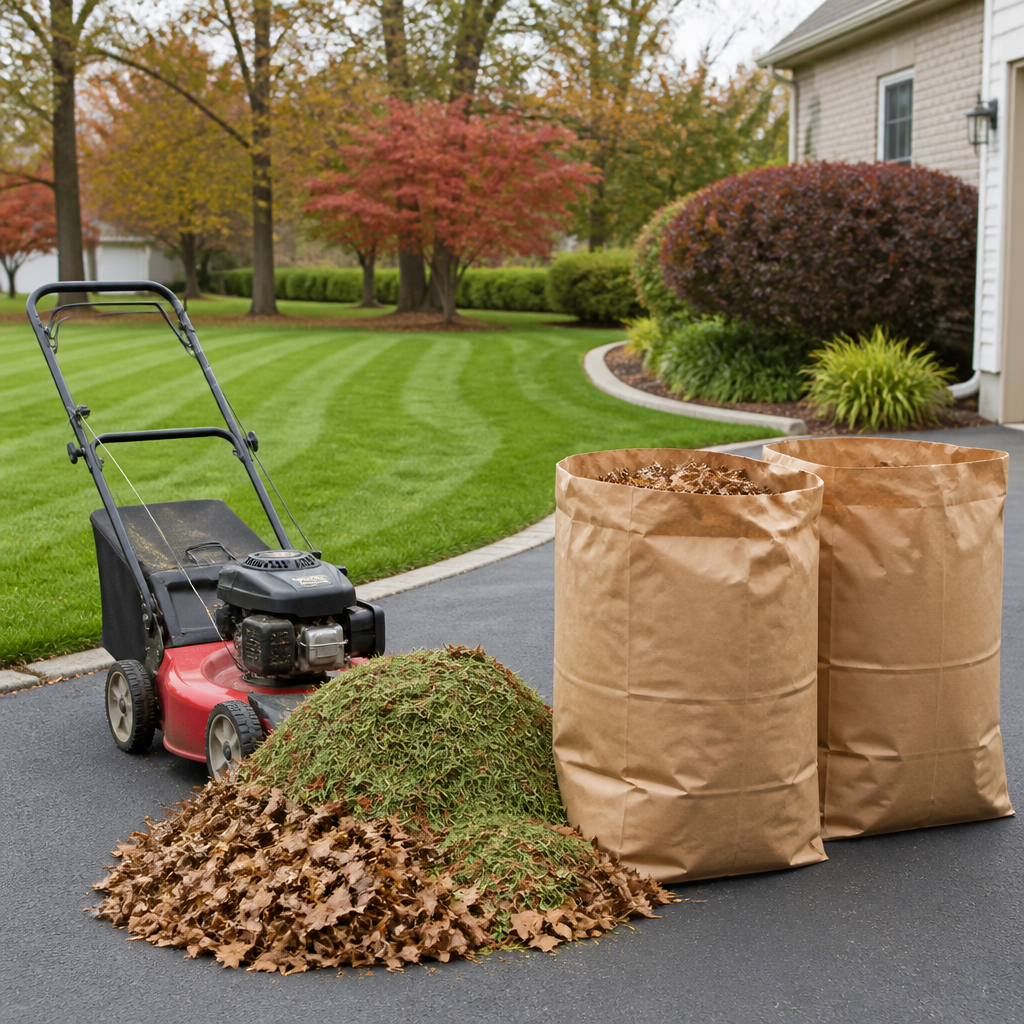
Caked clippings under the deck reduce airflow and make the cut uneven. Scrape the underside after each mow and confirm the mulching plug seats fully. Mulching depends on airflow as much as on the blade, so a dirty deck can undo a good setup.
Sharpening Before the Last Cuts
Sharpen blades at least once before the season winds down. Dull blades leave brown, ragged tips that make the lawn look stressed even when it is healthy. If you run a crew, keep a spare blade on hand, because swapping takes minutes and the difference in cut quality is easy to see from the curb.
Frequently Asked Questions
Should I bag or mulch grass clippings in fall in Alabama?
Mulch while the grass is still growing and the clippings are light. Bag when leaves pile up, when you are overseeding, or when you are treating a fungal disease. Most lawns benefit from switching between the two during the season.
Do mulched clippings cause thatch?
Not when mowing is regular and each cut is light. Thatch builds when the grass gets too tall between cuts and too much material is left behind at once. Keeping to the one-third rule is the simplest way to prevent it.
How often should I mow in the fall?
LawnStarter’s mulching guide recommends mowing every 5 to 10 days. Growth slows as temperatures drop, so you may need less frequent cuts, but keep each pass within one third of the blade.
Can I mulch with a regular mower?
Yes, in most cases. Close the side discharge opening, fit a mulching plug, keep the blades sharp, and mow only dry grass. A mulching mower performs better, but a standard rotary mower can do the job with the right setup.
Do grass clippings replace fertilizer?
They do not replace a complete fertility plan. Clippings return nitrogen, potassium, and phosphorus as they break down, which can reduce how much fertilizer you need. Use them as one part of your lawn program, not the whole thing.
Should I bag clippings after overseeding?
Yes, bag the early cuts after seeding. A heavy mat of clippings blocks light and keeps the seedbed damp, which slows germination. Return to mulching once the new grass is established and mowing regularly.
Share what you have seen on your own lawn this fall, whether mulching or bagging has worked better for you, and what would make the choice easier to make each time you mow.