Most shrubs that look fine in September are already showing trouble by the time the first hard freeze arrives. A failing root zone, a canker on a limb, or a patch of powdery mildew can hide under summer foliage for months. A shrub health check in Alabama this fall catches those problems while you still have time to act. This guide covers what to inspect, what the symptoms usually mean, and which winter prep steps actually protect the plant.
Table of Contents
- Quick Takeaways
- Why Fall Is the Right Time to Inspect Shrubs
- Start at the Root Zone and Root Collar
- Read the Canopy, Branches, and Foliage
- Diagnosing Disease and Pest Damage
- Choosing an Inspection Approach
- Winter Protection That Actually Helps
- Mistakes That Undermine a Fall Shrub Check
- Frequently Asked Questions
- References
Quick Takeaways
| Key Insight | Explanation |
|---|---|
| Inspect shrubs once a season, and never less than once a year | Some problems only show up at certain times of year, so one annual look is the minimum, not the goal. |
| Check the root collar first | Buried root collars and girdling roots cause slow decline that looks like drought stress from above. |
| Look for cankers and rubbing branches after leaf drop | Summer foliage hides structural defects, but thinning shrubs reveal dead wood and crossing limbs. |
| Separate environmental stress from disease | Poor drainage or compacted soil is not the same problem as fungal or bacterial infection, and treating the wrong one wastes time. |
| Hold fertilizer on any shrub with active disease | Pushing new growth into a stressed shrub before winter can make the decline worse. |
| Wrap tender shrubs in breathable cloth, not plastic | Burlap or agricultural cloth protects against a prolonged freeze, while plastic traps moisture against the plant. |
Why Fall Is the Right Time to Inspect Shrubs
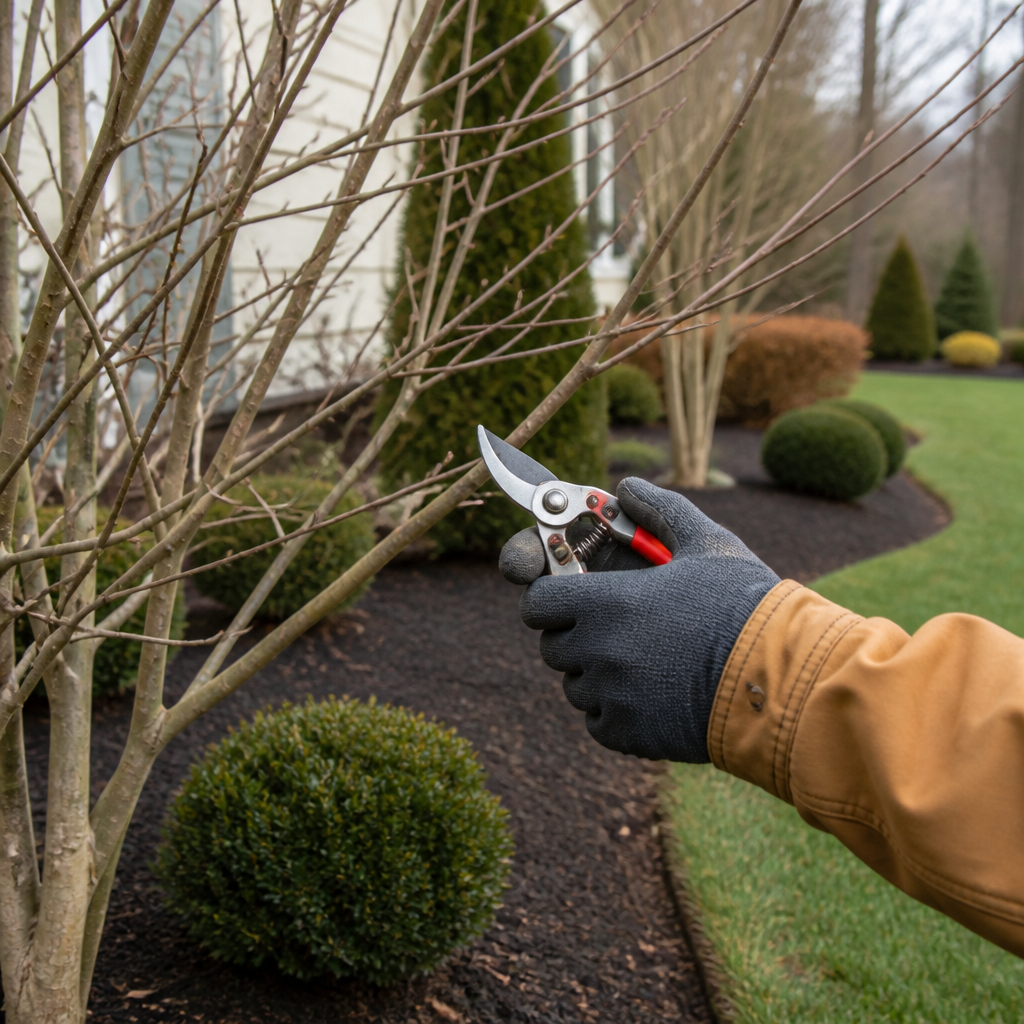
Fall gives you a clearer look at your shrubs than almost any other season. Deciduous shrubs drop their leaves, and the frame of each plant becomes visible. A fact sheet on fall maintenance from the University of Massachusetts notes that leaf drop makes it easy to survey and detect defects in woody plants, including canker formations and rubbing branches.
A shrub that looked full in July can show thinning interior growth, dead wood, or a crown that has lost density. Those signs matter before winter, because pruning, treating, and correcting drainage are much harder once the ground is cold and the plant is dormant.
A shrub’s problems usually start below the soil line long before the leaves show anything.
What a Full Fall Inspection Should Cover
A useful inspection looks at more than whether the shrub is green. Check overall vigor, growth habit, soil conditions, roots, structure, pests, diseases, and the trunk or main stems. If you are inspecting your own beds, work through the same list every year so you can compare one season to the next.
Guidance on tree and shrub inspections recommends one inspection per season where possible, because some issues can only be found at certain times of year. If a full seasonal check is not practical, do it at least once a year. A professional should also document findings so the history of each plant is available at the next visit.
Keep a Simple Shrub Log
Most homeowners forget what a shrub looked like twelve months ago. A basic log solves that. Write down the shrub species, its location, the date, any dieback or discoloration, and what you did about it. Photos taken from the same spot each year make subtle decline easy to spot.
Pro tip: Take one photo of each shrub from the same angle every fall. Comparing those images side by side is the fastest way to catch slow decline that you would otherwise miss.
Start at the Root Zone and Root Collar
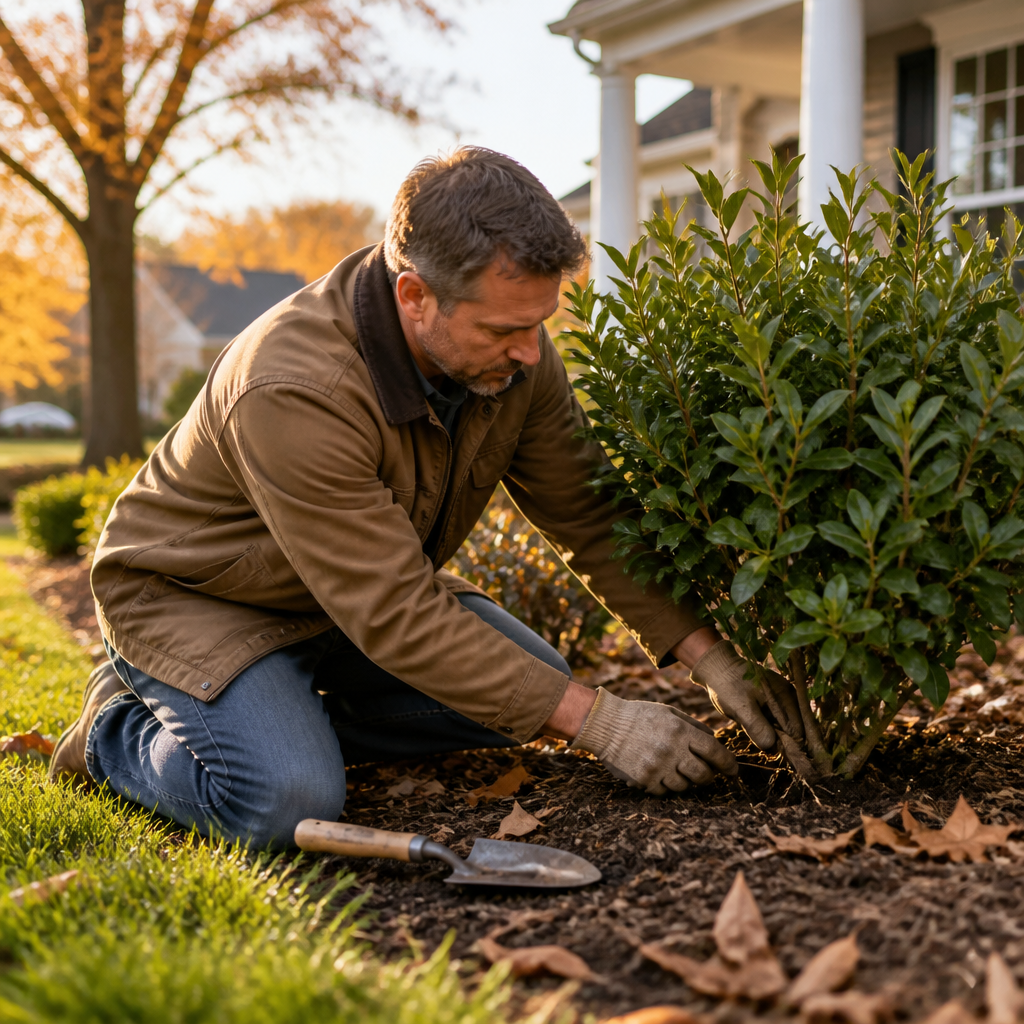
Most shrub problems that look like disease or drought start underground. Begin your check at the base of the plant, where the stems meet the soil. The root collar is the transition point between the trunk and the roots, and it should sit at or just above the finished grade of the bed.
When the root collar is buried under mulch, soil, or sod, the bark stays wet and the roots struggle to breathe. Over several seasons, that stress shows up as yellowing, reduced new growth, and branch dieback. In practice, a shrub with a buried collar often looks like it needs more water, even when the soil is already soggy.
Find the Root Collar Before You Dig
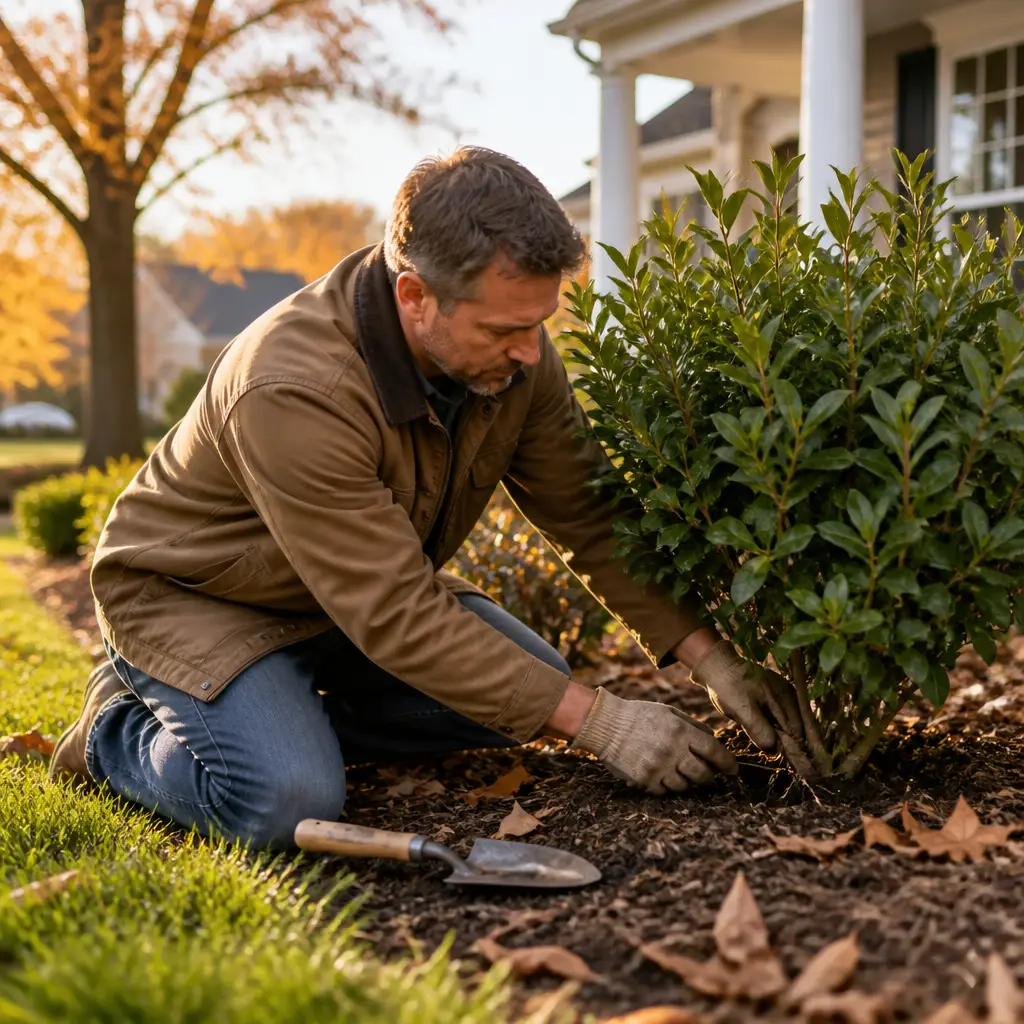
Brush back mulch carefully with your hands until you can see where the trunk flares into roots. If the flare is buried more than a few inches, the shrub has a planting or mulching problem that needs correcting. Do not dig deep trenches around the plant during the inspection, since you can damage fine roots that are doing most of the work.
Spotting Girdling Roots
Girdling roots grow around the base of the stem or wrap across it, slowly squeezing the vascular tissue. The result is a shrub that declines over several years with no obvious single cause. Look for roots that circle the trunk just below the soil surface, and note any stems that show thinning or swelling above a ring of constriction.
A certified arborist or horticultural inspector can often confirm girdling by probing the soil with a tool. Homeowners can still spot the early signs, which are usually uneven growth on one side of the shrub and a trunk that looks narrower than it should at the base.
Soil Compaction and Drainage
Heavy clay, foot traffic, and construction compaction are common causes of shrub decline in many yards. Push a screwdriver or probe into the soil around the drip line. If it goes in easily in some spots and stops abruptly in others, the bed has uneven compaction. Standing water after rain also means roots are short of oxygen, and that condition should be fixed before winter rather than after spring growth starts.
Read the Canopy, Branches, and Foliage
Once you have checked the base, work upward. The canopy and branches tell you what has been happening over the last one or two seasons. Dead wood, cankers, and crossing limbs are the three findings that most often need action before winter.
Dead branches are usually brittle, have no buds or leaves, and snap cleanly when bent. Live wood bends and shows green or cream tissue under the bark when scratched. Scratch a few branches at different heights to find out whether the dieback is isolated or spreading down from the top of the shrub.
Dead Wood and Cankers
Cankers are sunken, discolored areas on bark that can girdle a stem. They often show up as cracked or oozing patches, and they are a common finding when leaves drop in fall. A canker on a small branch can be pruned out. A large canker on the main stem usually means the shrub is in long-term decline, and replacement may be the better option.
Prune dead wood back to healthy tissue, and make the cut just outside the discolored area. Leaving stubs invites further decay. Do this work on a dry day, since wet conditions can spread some pathogens.
Rubbing Branches and Crossing Limbs
Two branches that rub against each other create open wounds that never fully close. Those wounds are an entry point for fungi and bacteria. During your inspection, look for limbs that cross inside the shrub and remove the weaker one. Thin the interior just enough to let light and air move through the center of the plant.
Fire Blight Signs to Watch For
Fire blight is a bacterial disease that causes twigs and branches to wilt and blacken. The affected branches often bend over into the shape of a shepherd’s crook. If you see this pattern, prune the infected areas during the dormant season and clean your pruning tools between cuts so you do not carry the bacteria from one plant to the next.
Pro tip: Wipe pruning blades with a disinfectant or rubbing alcohol between every cut on a suspected diseased shrub. Skipping this step is one of the most common ways a single infected plant turns into several.
Diagnosing Disease and Pest Damage
Before you treat anything, narrow the problem. Shrub diseases fall into two broad groups. Abiotic problems come from non-living factors such as too little root space, prolonged exposure to water with high salt or toxin levels, extreme heat or light, and soil pH problems. Biotic diseases are caused by living organisms such as fungi, bacteria, viruses, and nematodes.
The treatment for each group is different, and mixing them up is a common mistake. Adding fungicide to a shrub that is struggling because its roots are waterlogged will not fix anything. Likewise, correcting drainage will not stop a fungal infection that is already spreading across the foliage.
Abiotic Stress Versus Biotic Disease
Start by ruling out the environment. Check the soil moisture, drainage, mulch depth, and whether the shrub has been planted too deep or in a spot that is too shaded or too hot. Once you are confident the growing conditions are reasonable, move on to looking for signs of a living pathogen or pest.
Powdery Mildew and Other Fungal Signs
Powdery mildew is a common fungal disease that leaves a white, powdery coating on the surface of leaves. Start your response by removing the most heavily infected leaves and stems. Prune for better air circulation, and water at the base of the plant rather than overhead so the foliage stays drier. Hold off on fertilizer until the plant shows recovery, since fresh soft growth is more susceptible.
When a fungicide is used, it usually needs to be reapplied on a set schedule, often 7 to 14 days after the first application. Follow the label on the product you choose, and do not assume one application will end the problem on its own.
Browsing Damage From Wildlife
Not every damaged shrub has a disease. Rabbits and deer leave clean, angled cuts on stems and strip leaves from lower branches. If you see gnawing marks or stripped foliage concentrated at a certain height, the problem is likely wildlife. Protective fencing or repellents applied before winter work better than trying to repair the damage in spring.
Choosing an Inspection Approach
Homeowners have three realistic options for checking shrub health. Each one answers a different question, and the right choice depends on how many plants you have, how valuable they are, and how quickly you need an answer. The table below compares the most common approaches.
| Approach | Best For | Main Limitation |
|---|---|---|
| Homeowner walk-around inspection | Routine seasonal checks, spotting dead wood, rubbing limbs, and obvious wildlife damage | Cannot confirm the cause of root decline or identify a specific pathogen with certainty |
| Professional inspection by a certified arborist or horticulture specialist | Large or high-value shrubs, unclear decline, and a written record of recommendations | Costs more than a self-check, and quality varies, so ask about credentials and what the report includes |
| Lab testing of soil or leaf tissue | Confirming nutrient problems, checking soil chemistry, and supporting a diagnosis when symptoms are confusing | Results only describe the sample taken, so a poorly collected sample can mislead you |
In practice, most property owners do well with a walk-around every fall and a professional visit when a shrub has been declining for more than one season. Lab testing is worth the cost when you are deciding whether to replace a valuable specimen or when the symptoms could come from several causes at once.
Winter Protection That Actually Helps
Once your inspection is finished, the goal shifts to helping the shrub enter dormancy in good condition. Winter protection works best when it addresses the problems you found, rather than being applied as a blanket routine. Start with water, then mulch, then any physical wrapping for tender species.
Water Before the Ground Stiffens
A shrub that goes into winter dry is more vulnerable to damage. Roots can keep taking up water until the soil freezes, so a deep watering in late fall helps the plant carry moisture through the cold months. Focus on the root zone at the drip line rather than sprinkling the top of the plant, and water slowly so the soil absorbs the moisture instead of running off.
Mulch Without Burying the Trunk
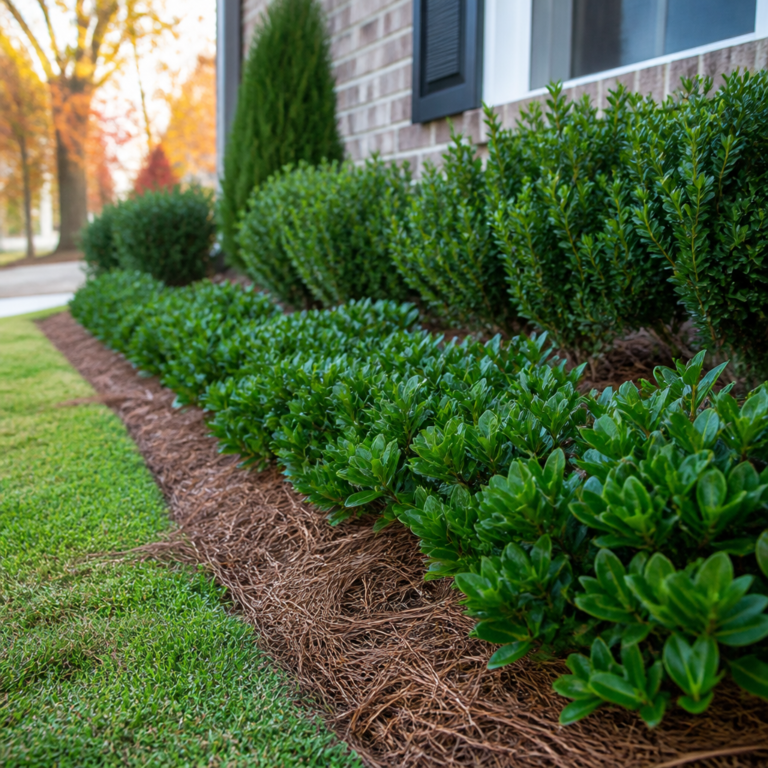
A layer of mulch helps moderate soil temperature and hold moisture. Spread about two to three inches of organic mulch across the root zone, but keep it pulled back from the stem. Mulch piled against the trunk, sometimes called a mulch volcano, holds moisture against the bark and encourages decay. The mulch ring should stop well short of the root collar.
Wrapping Tender Shrubs Correctly
Tender shrubs that are marginal for your area may need physical protection during a hard freeze. Wrap them in burlap or agricultural cloth, which lets the plant breathe while blocking wind and some cold. Avoid plastic. It does not breathe, and it traps moisture and heat against the foliage, which can cause more damage than the cold itself. Remove the wrap when temperatures warm so the plant does not stay sealed up.
Mistakes That Undermine a Fall Shrub Check
The most common mistake is treating a fall check as a cleanup task. Homeowners rake leaves, cut back everything, and assume the shrubs are fine. That approach misses the root and canopy findings that matter most. Slow down enough to look at each plant, and record what you find before you start cutting.
Another frequent error is pruning heavily late in the season. Cutting large amounts of live wood just before winter can stimulate tender growth that the cold will damage. Save major structural cuts for the dormant season, when the plant is less likely to respond with new growth that gets killed off.
Finally, do not wait until spring to deal with problems you found in fall. Drainage fixes, wildlife protection, and disease removal are easier to complete before the plant starts pushing new growth. Waiting turns a manageable problem into a shrub that is already stressed when the growing season begins.
Pro tip: Schedule your fall inspection before the first hard freeze, not after. Once the shrubs are dormant and covered in frost, you lose the chance to correct drainage, remove dead wood cleanly, and assess the root zone under easier conditions.
Frequently Asked Questions
When is the best time to check my shrubs before winter?
Late fall, after most leaves have dropped and before the first hard freeze, is the best window. Leaf drop makes branch structure and cankers easy to see, and you still have time to correct drainage, remove dead wood, and water deeply before the ground stiffens.
How can I tell if a shrub is dead or just dormant?
Scratch a small section of a stem with your fingernail or a knife. Green or cream tissue under the bark means the stem is alive. Brown, dry tissue with no moisture means it is dead. Check several stems at different heights, because a shrub can have live wood at the base and dead wood at the top.
Should I fertilize my shrubs in the fall?
Generally, no, especially if a shrub has active disease or shows signs of stress. Fertilizer can push soft new growth that winter damages. If a soil test shows a real nutrient deficiency, correct it in a measured way, and follow the product label closely.
Can I prune my shrubs before winter?
Remove dead, damaged, or diseased wood at any time you find it, and clean up rubbing branches. Save major structural pruning for the dormant season, since heavy cuts made too late in fall can stimulate growth that cold weather will harm.
What should I do if I find signs of disease during my inspection?
Identify the symptoms first, separating environmental stress from biotic disease. Remove infected tissue with clean tools, improve air circulation, and avoid overhead watering. If the decline continues or the plant is valuable, have a professional confirm the diagnosis before you commit to a treatment plan.
Tell us what you found the last time you checked your shrubs before winter, and whether anything surprised you.
We would love your feedback and any insights you would share with others. What perspective would you add?