Fall is when many Alabama yards look their best, and it is also when string trimmers do their most awkward work. Leaves collect against borders, shrubs push toward walkways, and the grass along your edging keeps growing as the weather cools. Getting string trimming right around fall landscaping features, from mulch rings to retaining walls, is the difference between a clean finish and scalped bark, nicked stems, and gravel sprayed across the beds. This guide covers how we approach string trimming fall Alabama yards, where the tool does the most damage, and the habits that keep your beds looking deliberate all season.
Table of Contents
- Quick Takeaways
- Why Fall Trimming Calls for a Different Approach
- Matching String, Heads, and Blades to Fall Growth
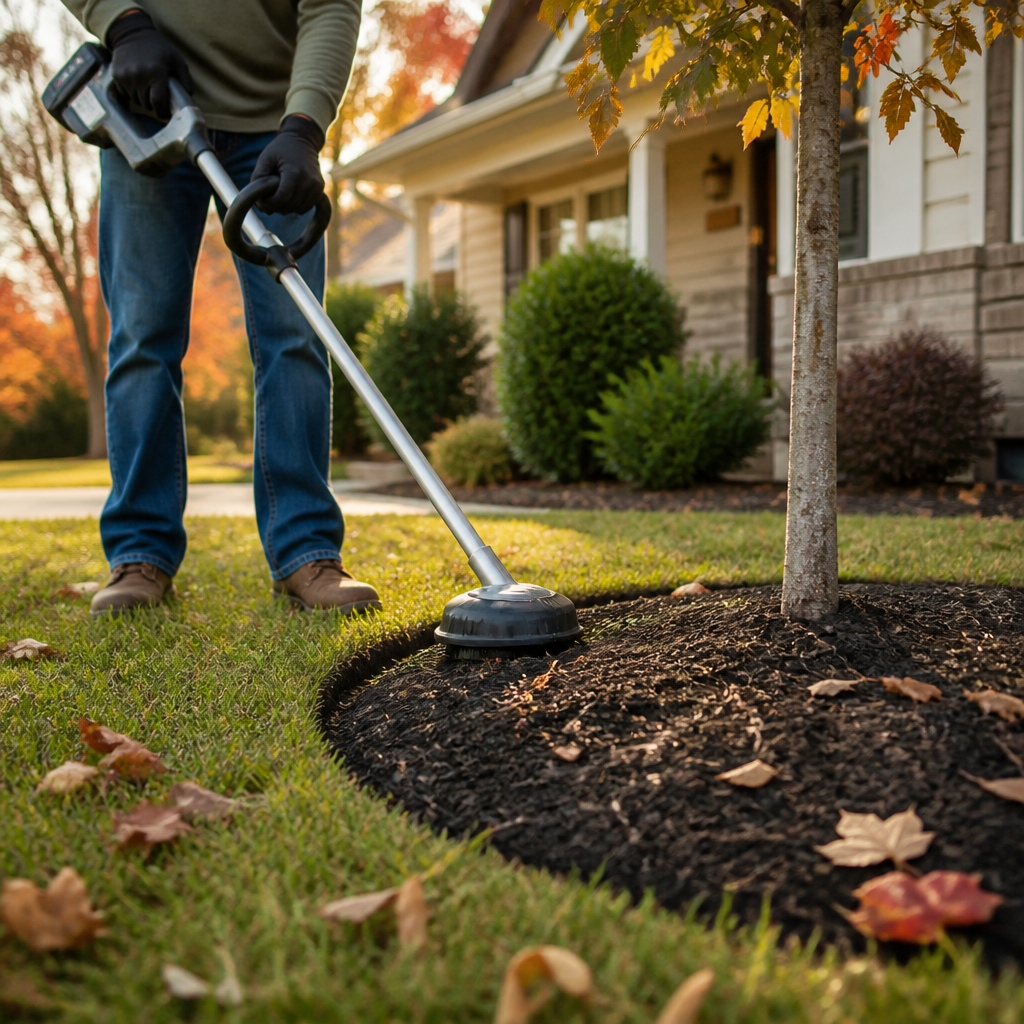
- Trimming Around Mulch Rings and Tree Bases
- Edging Along Walkways, Beds, and Mowing Strips
- Working Around Shrubs, Beds, and Fresh Plantings
- Comparing Trimming Approaches Side by Side
- Fire Risk and Safety in Dry Fall Conditions
- Frequently Asked Questions
- References
Quick Takeaways
| Key Insight | Explanation |
|---|---|
| Keep the cutting head low and sweep it side to side | Working the head close to the ground lets the string sever stems at the soil line instead of whipping bark and root flare. |
| Match the string or blade to the plant | Thinner string suits grass and soft weeds. Thicker string on a fixed head or a blade handles woody or thick-stemmed growth. |
| Build mulch rings before you trim around trees | A ring extended 2 to 3 feet from the trunk removes the need for most string work at the base of the tree. |
| Release the throttle near desirable plants | When the head stops spinning, you can sweep over shrubs and perennials without slicing into them. |
| Treat metal blades as a fire risk in dry leaves | Metal-bladed trimmers can throw sparks, so keep an extinguisher within reach any time vegetation is dry. |
| Dress for the job every time | Long pants, gloves, and eye protection stop flying debris and keep you safe when you are working close to hard edges. |
Why Fall Trimming Calls for a Different Approach
A string trimmer is a spinning cutting implement on a handheld pole, powered by gas or electricity, and it is usually carried on a shoulder harness. The string does its work by whipping against upright stems, which means it cuts whatever is standing at the height of the head. In a fall yard, that includes grass that has not stopped growing, weeds that have gone to seed, and the lower limbs of shrubs that you planted specifically to look tidy against a border.
The real trouble in fall is that the yard is messier than it was in summer. Leaves blow into the same corners every week, and they hide edges, soft mulch, and the low branches you need to avoid. In practice, most of the damage we see comes from crews who trim by sight in a hurry instead of setting the head low and working slowly around each feature.
Pay the most attention to the spots where the tool does the most harm. Tree trunks, the base of shrubs, decorative stone, and the first few inches of a bed edge all take the brunt of a careless pass. A line of string that barely touches bark can leave a mark that lasts through the winter.
Pro tip: Before you start the trimmer, walk the full run of each bed and note every tree trunk, shrub base, and stone edge. Mark the spots that need a slower pass so you are not making those decisions while the head is spinning.
The cleanest trim is almost always the slowest one. Most scalped beds and damaged bark come from rushing the last foot of a pass, not from the cutting itself.
Matching String, Heads, and Blades to Fall Growth
The most common mistake we see is one string setup used for every job on the property. Select the cutting head and string for the target species, and install them according to the manufacturer’s specifications. String thickness should match the toughness of the plants you are cutting, because a line that is too thin will wear out quickly on woody stems and a line that is too thick will work harder than it needs to on grass.
Plastic String for Grass and Soft Weeds
Most string trimmers feed more line by bumping the head on the ground while the motor runs. That bump feed is convenient for open lawn edges and light weed growth, and it works well on the soft grass that still greens up in the fall. Keep the line in good condition and check it often, since frayed or short string cuts poorly and wears the motor down faster.
Fixed Heads for Thick Stems and Mixed Growth
For thick-stemmed plants and mixed plant communities, a fixed head with more robust string makes more sense than a bump-feed head. A fixed head does not dispense new line on its own, so it avoids the constant shortening that happens when you are cutting through tougher material. In practice, we switch to a fixed head when a bed edge is choked with dried weeds and older perennial stalks.
Blades for Woody and Dry Growth
For woody and thicker dry weeds, plastic or metal blades cut far better than string. Blades range from single fixed semi-round blades to multiple articulated blades, and metal blades can also handle smaller diameter woody vegetation. Use blades only where the target calls for them, because they remove a lot of material quickly and can cut into landscape features you did not intend to touch.
Trimming Around Mulch Rings and Tree Bases
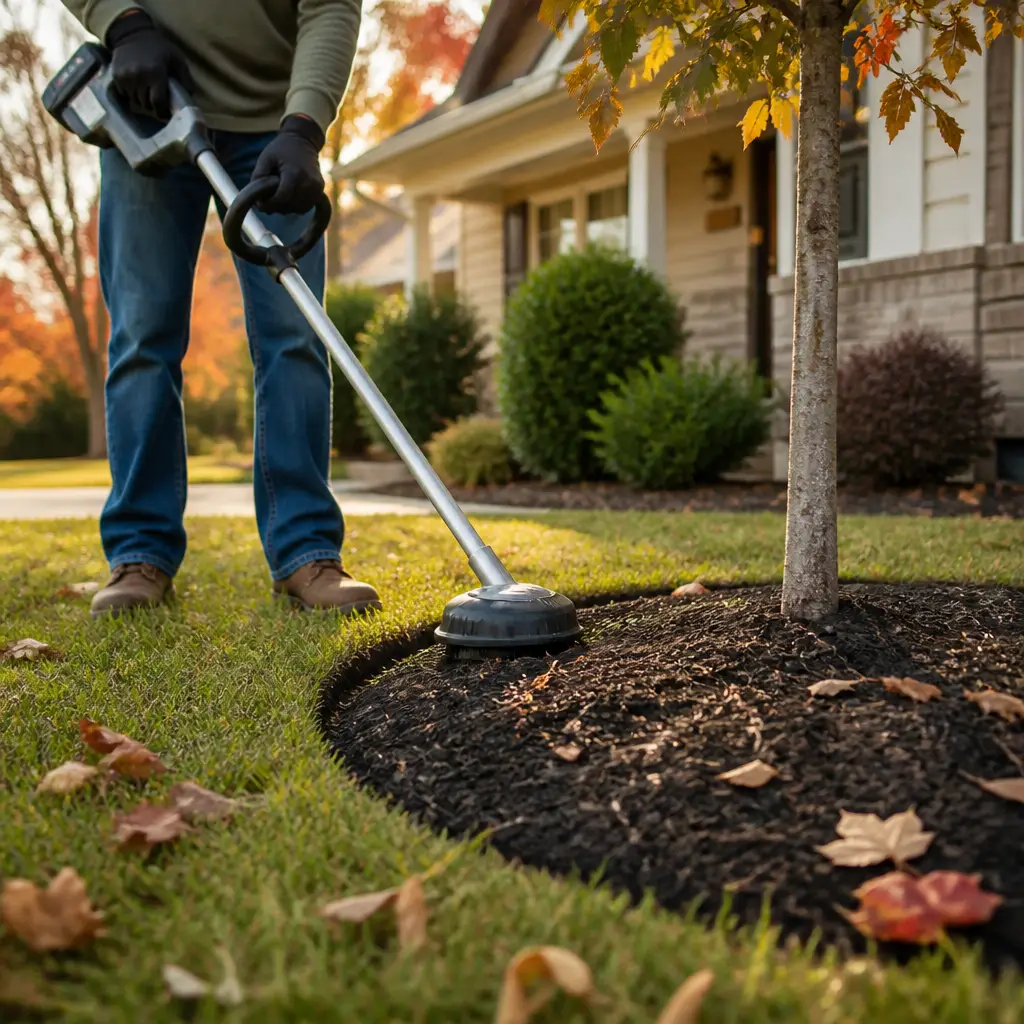
The base of a tree is the place where a string trimmer does the most lasting damage. A mulch ring removes that risk, and it also cuts down the amount of string work you have to do each fall. Research from the University of Florida IFAS Extension lists preventing mower and trimmer damage to tree trunks, and reducing string trimming around tree bases, among the main benefits of a mulch ring.
Sizing the Ring for Clean Trimming
The IFAS guidance recommends extending mulch 2 to 3 feet from the trunk and keeping the depth at 2 to 3 inches after it settles. That is the zone you want the string to stay out of. Once the ring is in place, the grass beyond it is the only area you need to trim, and the trimmer never has to get close to the trunk.
Keeping Mulch Away from the Trunk
Mulch should never sit against the trunk itself. The IFAS advice is to taper it gently away from the bark so moisture does not collect against the tree and cause problems. We also check that the mulch surface sits below the level of the surrounding grass, which helps keep grass roots from creeping into the ring and forcing you to trim inside it.
A common mistake is piling mulch up against a young tree because it looks full. That habit hides the trunk flare, traps moisture on the bark, and makes you guess where the trimmer head is. Keep the trunk visible and the ring open, and the job gets easier every year.
Pro tip: Trim around a tree in a single pass that follows the outer edge of the mulch ring, instead of weaving in toward the trunk. Each pass should stay on the grass side of the mulch line, with the head never crossing into the ring.
Edging Along Walkways, Beds, and Mowing Strips
Edging is where a yard either looks polished or looks like it was done in a hurry. Every bed line, walkway, and driveway edge is a place where grass runs into a hard surface, and string trimming is not the best tool for keeping those lines sharp. A string trimmer can clean up a line, but it cannot define one the way a built edge can.
Building a Mowing Strip That Works
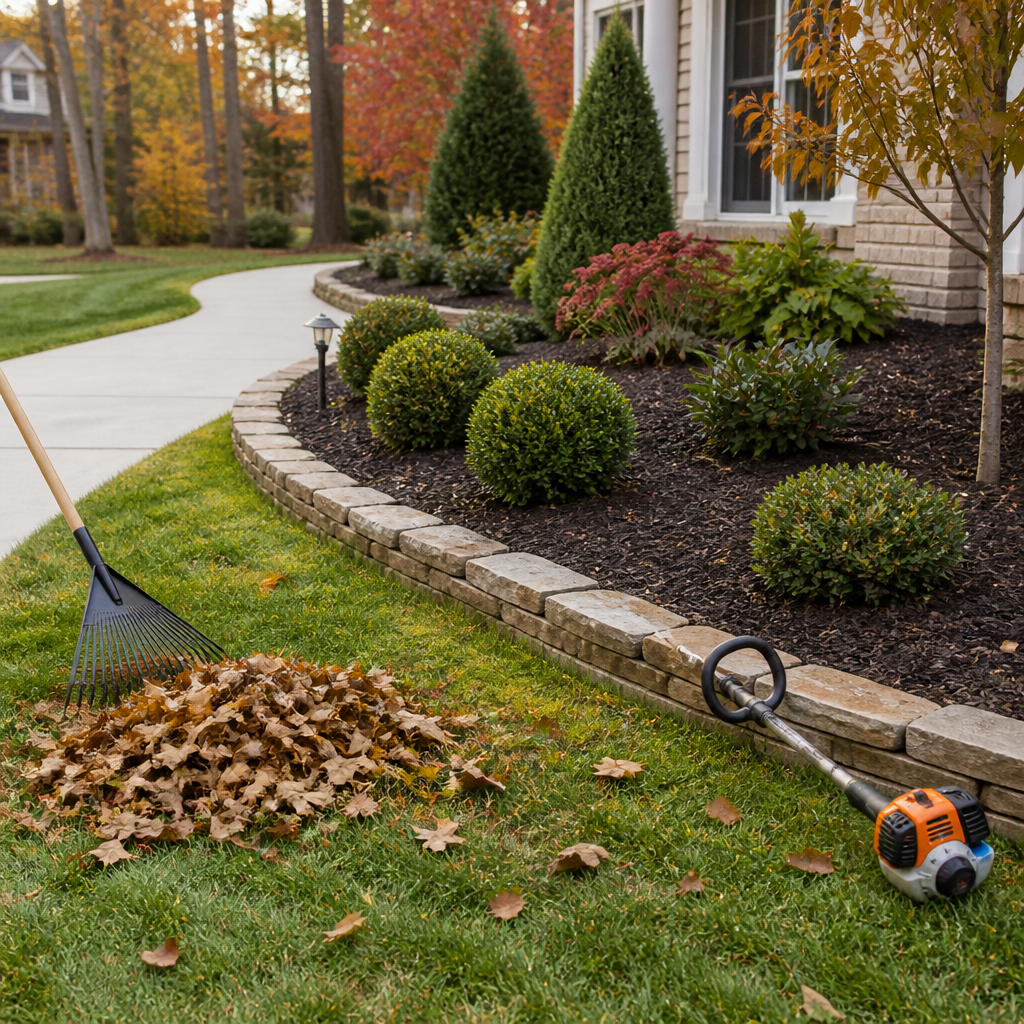
The UF/IFAS guidance describes mowing strips as narrow, flat surfaces installed along the edges of garden beds, walkways, or other landscape features. They reduce the need for excessive trimming, create a clean border between lawn and planting areas, and keep grass from encroaching into beds. Brick, concrete, or stone pavers all work, provided the surface sits level with the lawn so the mower wheels can ride across it.
Trimming Edges Without Scalping the Bed Line
Where there is no mowing strip, keep the head angled so the string cuts the grass at the edge rather than digging into soil. Work slowly, and let the head do the cutting instead of pushing it into the bed. In practice, a few extra minutes on a long walkway edge save you from the ragged look that shows up in the following weeks.
Working Around Shrubs, Beds, and Fresh Plantings
Shrubs and new plantings are the features that most often get damaged in fall. Their lower limbs and root zones sit right in the path of a trimmer head, and many of them are still establishing. The rule we follow is simple: if a plant is one you want to keep, the trimmer should not be the tool that touches it.
Shrub Bases and Lower Limbs
When the head is spinning, the UC IPM guidance says to stop the blade by releasing the throttle, or to sweep the trimmer over the top of desirable plants. Avoid trimming those plants when possible. For a shrub with low branches, that means working around the outer drip line and using hand pruners for anything that needs to come out at the base.
Newly Planted Material
Young plants have thin bark and shallow roots, so a string that barely grazes the stem can girdle or stress them. Keep the head well outside the root ball, and mark new beds with a flag or a stake until they fill in. Once the plants are established, you can return to normal edging with less worry.
A bed that looks finished in the fall is one where the trimmer never had to make a decision about a plant it should not have touched.
Pro tip: Before you start a run along a shrub bed, do a quick sweep with your hand over the top of the plants to find any stems that lean into the grass. Bend them back out of the way first, so the head does not catch them on the way past.
Comparing Trimming Approaches Side by Side
Each trimming setup has a clear place, and the wrong choice costs you either time or plant health. The table below compares the three approaches we use most often on fall properties. Choose the one that matches the growth in front of you, not the one that is already on the trimmer.
| Approach | Best Use | Main Trade-off |
|---|---|---|
| Bump-feed string head | Open lawn edges, light weeds, and soft grass along walkways | Wears out quickly on woody stems and needs frequent line checks |
| Fixed head with heavier string | Thick-stemmed perennials and mixed plant beds with dried growth | Does not feed new line on its own, so you must stop and replace string by hand |
| Plastic or metal blade | Woody and thicker dry weeds, and small-diameter woody vegetation | Cuts aggressively, can throw sparks with metal, and can reach features you meant to protect |
In practice, most fall properties need two of these setups, not three. A bump-feed head handles the bulk of the lawn, and a fixed head or blade covers the beds and edges that need more force. Switching heads between zones takes less time than fighting a poor setup for the whole afternoon.
Fire Risk and Safety in Dry Fall Conditions
Dry leaves and cured grass burn easily, and a metal blade can start a fire if it strikes a stone or hard object. The UC IPM guidance notes that metal-bladed trimmers and brush cutters can create sparks that cause fire, and it recommends extra precaution whenever you run powered equipment in dry conditions. That means checking the weather and the ground before you start, not after you smell smoke.
When vegetation is dry, keep a fire extinguisher on hand and have a response plan in place. The UC IPM guide specifically recommends this step to reduce the risk of fire. We keep a fire extinguisher on the truck and treat any dry corner as a reason to switch to a safer setting.
Personal Protective Equipment for Trimming
Wear long pants, gloves, and eye protection whenever you run a trimmer. Flying debris and small stones can come off a hard edge at speed, and the UC IPM guide lists those three items as the baseline. Hearing protection is a sensible addition on long runs.
Gravel, Trash, and Hard Surfaces
The Oklahoma State University Extension guidance on lawn care safety warns that trimmers and edgers can be dangerous to operate, especially around gravel and trash. Clear loose debris from the path before you start, and avoid pointing the head toward gravel driveways or pavers. A quick walk along the run pays off in fewer chips, scratches, and surprises.
Frequently Asked Questions
How low should I hold a string trimmer near fall beds?
Keep the cutting head as close to the ground as you can while still cutting cleanly, and move it side to side to sever the stems. Holding the head higher leaves stubs, and angling it into the bed scalps the soil and bark. Work slowly, and let the string do the cutting instead of pushing.
What string or blade should I use for tough fall weeds in Alabama?
Match the setup to the plant. Thinner string on a bump-feed head works for grass and soft weeds, while a fixed head with more robust string or a blade is the better choice for thick stems and woody growth. Metal blades should be reserved for targets that need them, and only when conditions are not dangerously dry.
Can I trim right up to a tree trunk?
You should not, and a mulch ring is the easiest way to avoid the problem. Extending mulch 2 to 3 feet from the trunk gives the trimmer a clear boundary, and it keeps the string away from the bark. Keep the mulch tapered away from the trunk so moisture does not sit against it.
Are metal blades safe to use in dry fall leaves?
Metal blades can create sparks that start a fire, so they require extra caution in dry conditions. Keep an extinguisher nearby, follow a response plan, and avoid striking stones or hard edges. If the leaves are dry and the ground is hard, switch to a string head for that part of the job.
How do I keep the trimmer away from shrubs I want to keep?
Release the throttle to stop the spinning head before it reaches desirable plants, or sweep over the top of them. Bend lean stems out of the way first, and use hand pruners for any cuts at the base. If a plant is young or newly set, keep the head well outside its root zone.
Should I edge before or after mowing?
In practice, mow first and edge after, so the bed lines are cut against a clean, shorter lawn. Trimming after the mow also shows you where the edge needs more care, and any debris you push into the beds is easier to clear at the end of the job.
Tell us which fall trimming problem gives you the most trouble around your beds, and how you solved it.
We would love your feedback and any insights you would share with others. What perspective would you add?