Most Alabama yards look tired by late October. Summer annuals are finished, the turf has gone dormant, and bare soil between shrubs is the first thing a visitor notices. Choosing cold tolerant ground cover before winter is one of the cheapest ways to fix that, but only if the plants and mulch match how cold your yard actually gets and how much shade and foot traffic the bed takes. At Waters Edge Lawn Care, we see the same mistakes every fall in Pike Road and the surrounding neighborhoods: bare beds filled with the wrong material, evergreen picks planted in the wrong corner, and mulch that washes out before spring. This guide covers what to plant, what to spread, and when to do it.
Table of Contents
- Quick Takeaways
- Why Alabama Beds Need a Winter Plan
- Evergreen Ground Covers That Hold Their Color
- Pine Straw, Wood Mulch, or Rock
- How the Main Options Compare
- Shade Beds Under Oaks and Pines
- Timing Your Fall Bed Refresh
- Common Mistakes That Ruin Winter Beds
- Frequently Asked Questions
- References
Quick Takeaways
| Key Insight | Explanation |
|---|---|
| Zone numbers are a starting point | Evergreen picks rated for zone 3 or 4 typically keep their leaves in zones 5 and up, so check the bed’s real exposure before you buy. |
| Pick the coldest corner as the test | Plant for the windiest, most exposed spot in the bed. If it survives there, the rest of the bed will follow. |
| Bugleweed fills fast and tolerates shade | It handles full sun to full shade, but it spreads by runners, so keep it out of beds where you need precise edges. |
| Pine straw belongs on slopes | It locks in place on grades and erosion-prone spots, but it thins and blows away, so plan on yearly top-ups. |
| Wood mulch lasts longer | It breaks down slowly, adds organic matter, and holds moisture, which makes it the better choice for flat beds that need steady soil conditions. |
| Plant with time to root | Get evergreen plants and ground cover in the ground in early fall so roots establish before the cold settles in. |
Why Alabama Beds Need a Winter Plan
A bed that looks fine in July can look like a mud pit by January. The problem is rarely the cold itself. Bare soil takes rain hard, invites weeds, and bakes in the first warm week of spring. A good ground cover holds the soil together through the slow months and keeps the bed from looking abandoned.
The guidance from Garden of Eatin’ is useful here because it draws a clear line on hardiness. The evergreen ground covers it recommends are rated hardy to zone 3 or 4, but they typically keep their leaves and stay green in zones 5 and up. Leaves that stay green also depend on the variety, the plant’s location and health, and how much rain, wind, or snow the bed receives.
Reading Your Bed Before You Buy
Walk the bed at noon and again in the late afternoon. Note which corners stay in shade, which ones collect wind off the driveway, and where water pools after a storm. Those three observations matter more than the tag on the pot.
In practice, the shady side of a house and the spot near a brick wall that holds heat behave very differently. Plant the same variety in both places and you may get two different results by March.
Plant for the worst corner of the bed, not the best. The spot with the most wind or the coldest exposure decides whether the ground cover makes it through the season.
Once you know the exposure, write it down. Next fall, when you are back at the garden center, that note will save you from buying plants that only work in the bed you wish you had.
Evergreen Ground Covers That Hold Their Color
Evergreen ground covers are the reason a winter bed can look intentional instead of empty. The picks below come from the Garden of Eatin’ guide and from what we see holding up in Alabama beds. Each one has a specific job, and none of them is a universal answer.
Bugleweed for Tough, Fast-Filling Beds
Bugleweed (Ajuga reptans) is extremely cold-hardy and tolerates a wide range of soil types, from full sun to full shade. It reaches up to about 10 inches tall with a spread of around 3 feet, and it blooms from spring through summer with spikes of flowers that draw pollinators.
The catch is that most varieties spread by runners and get aggressive quickly. Plant it where you want to choke out weeds and you will be happy. Plant it next to a mulched bed edge with no barrier and you will be pulling it out of the lawn by midsummer. Some upright types spread less, so ask for those if you need control.
Pro tip: Put a physical edge, such as a steel or plastic border buried a few inches deep, between bugleweed and any turf. Runners cross a mowing edge faster than most people expect.
Candytuft for Warm Microclimates
Candytuft (Iberis sempervirens) is a flowering ground cover that can stay green in zone 5 when it is planted strategically, such as in a warmer microclimate on your property. Its dark green foliage adds color in winter, and in spring it produces white flowers that stand out against the green.
Unlike plants that spread by underground stems, candytuft roots wherever its stems touch the ground. It typically grows around 16 inches tall and wide. Use it near a south-facing wall or at the base of a stone border, and keep it away from the coldest wind channels on the property.
Creeping Lilyturf in Milder Yards
Creeping lilyturf (Liriope spicata) has no trouble staying green in milder climates. In colder regions, though, the foliage may turn brown, so it works best in the warmer parts of a yard. If your bed sits in an exposed spot, pair it with a hardier plant rather than relying on it alone.
Pine Straw, Wood Mulch, or Rock
Mulch is where many fall bed refreshes go wrong. The choice between pine straw, wood mulch, and rock depends on slope, plant density, and how often you want to be out there with a rake. Each material solves a different problem, and each one creates its own maintenance schedule.
Where Pine Straw Earns Its Place
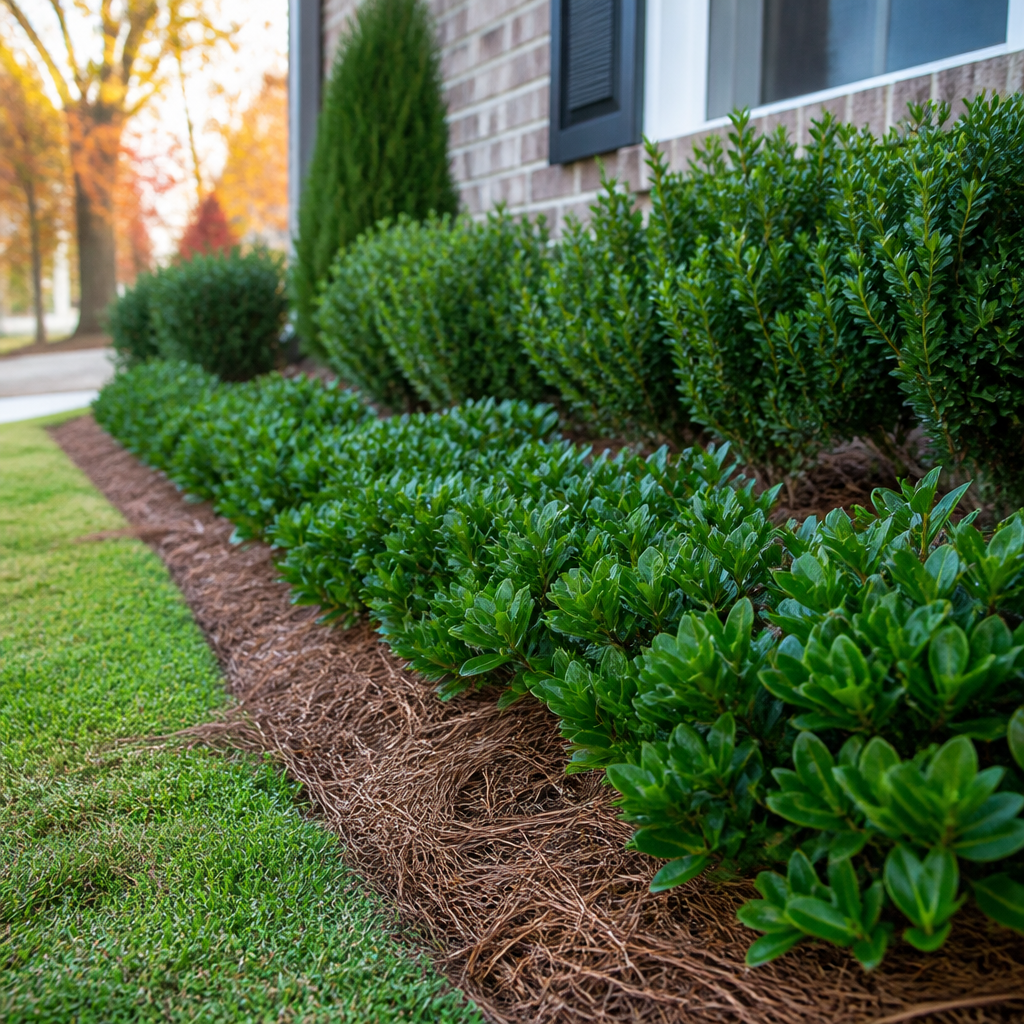
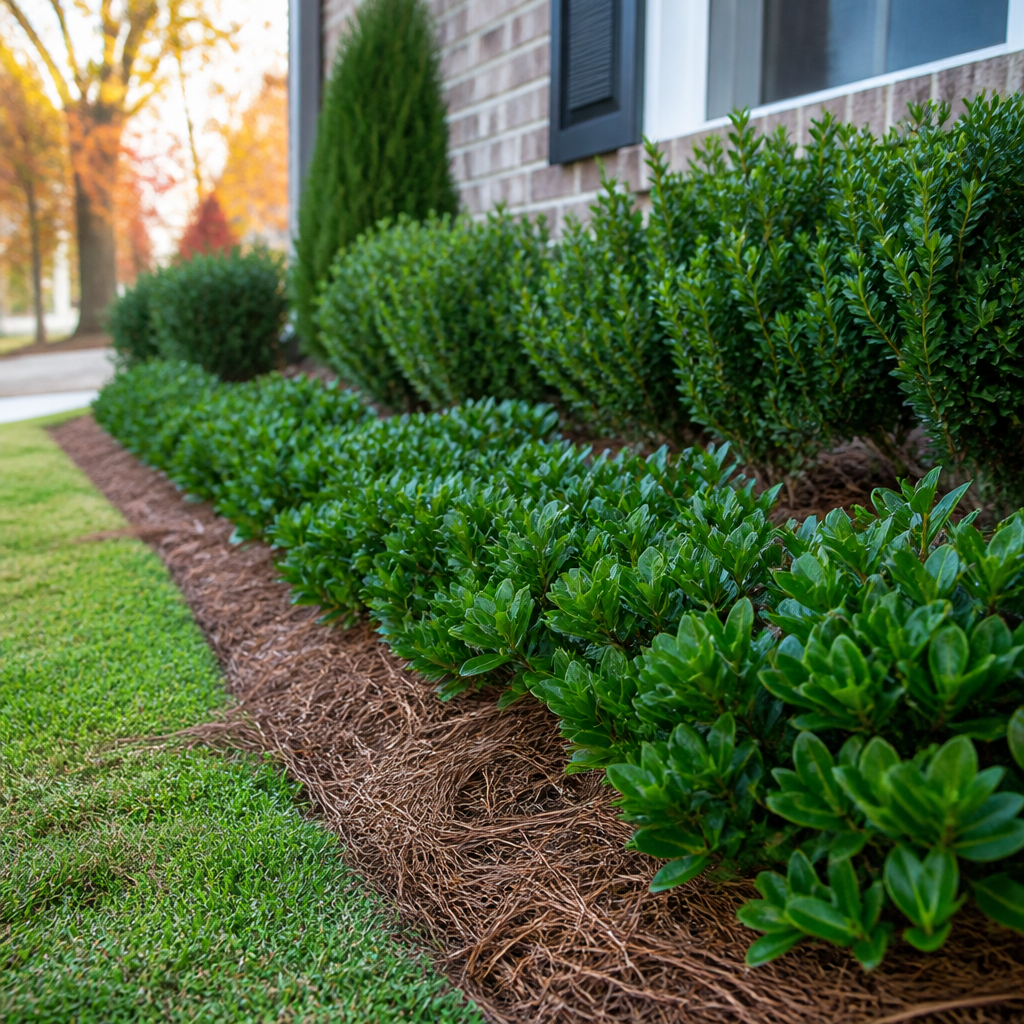
Pine straw is the better pick when erosion is the main concern. According to the LawnStarter comparison of mulch and pine straw, its structure helps keep soil in place, which makes it a strong choice for sloped gardens and spots prone to heavy rain. It is also easy to spread and lightweight to transport.
The trade-off is durability. Pine straw can thin out or blow away, so it often needs yearly top-ups. Budget for that in your fall plan rather than discovering bare patches in February.
Why Wood Mulch Holds Moisture Longer
Shredded wood mulch and wood chips break down slowly. As they do, they add organic matter and nutrients to the soil. They also hold moisture, cool the soil, and suppress weeds, which is why they suit flat beds that need steady conditions.
Wood mulch lasts longer than pine straw, so over a full year it may cost less in replacement. Its weakness is slope control. On a steep grade, heavy rain can carry it downhill, so pair it with plants or a retaining edge on any incline.
Where Rock Works and Where It Fails
Rock has a place in Alabama landscaping, mostly in paths, around hardscape, and in dry edge areas. Our view is that it is a poor choice for a planting bed you want to keep green. Rock does not break down, does not improve the soil, and holds heat around plants in the warm months.
If you do use rock, keep a clear zone around the stems of any living plant and use a landscape fabric barrier underneath. Without that, weeds find their way through the gaps and you end up pulling them by hand.
How the Main Options Compare
The table below puts the three most common fall choices side by side. Use it to match your bed’s slope, shade, and maintenance tolerance to a real option rather than a general preference.
| Option | Best Use in Alabama Beds | Main Trade-off |
|---|---|---|
| Pine straw | Sloped beds and erosion-prone spots with light foot traffic | Thins and blows away, usually needs yearly top-ups |
| Shredded wood mulch | Flat beds that need moisture retention and soil enrichment | Can wash downhill on steep grades and costs more to replace than it first appears |
| Bugleweed ground cover | Living cover in shady or sunny beds where weed control matters | Spreads by runners and needs a physical edge to stay in bounds |
No single option wins every bed. A typical setup we recommend pairs a living evergreen cover in the planting zone with wood mulch in the flat sections and pine straw on the grade. That combination handles both erosion and moisture without making the bed look like a patchwork.
Shade Beds Under Oaks and Pines
Shade beds are where ground cover choices get narrow fast. Sun-loving evergreens struggle under mature trees, and the soil often stays damp or compacted. The answer is to pick plants that are already adapted to those conditions.
Southern Shield Fern for Moist Shade
The Alabama ground cover guide from ACES lists Southern Shield Fern (Thelypteris kunthii) as a perennial fern with arching fronds that grows up to about 36 inches. It does best in moist, acidic soil, which makes it a good match for shady, damp corners under trees. Do not plant it in a bed that dries out hard in August, because it will sulk.
Plant it in groups of three or more for a fuller look. A single fern in a large bed reads as a mistake rather than a design choice.
Working Around Tree Roots
Tree roots make digging difficult, so avoid planting deep holes near the trunk. Instead, loosen the top few inches of soil, set plants in shallow pockets, and cover the root zone with a thin layer of mulch. Keep mulch pulled back from the trunk so bark stays dry.
The ACES guide also names Partridge Berry among its ground cover options for Alabama landscapes. Check its growing notes against your bed’s shade level before you commit, since shade tolerance varies a lot between species.
Timing Your Fall Bed Refresh
Timing matters more than most homeowners expect. Plant too late and the roots never settle in before cold weather. Plant too early during a heat spell and the young plants stress before they can establish. The goal is to give roots a few weeks of mild soil before the coldest nights arrive.
Planting Window in Early Fall
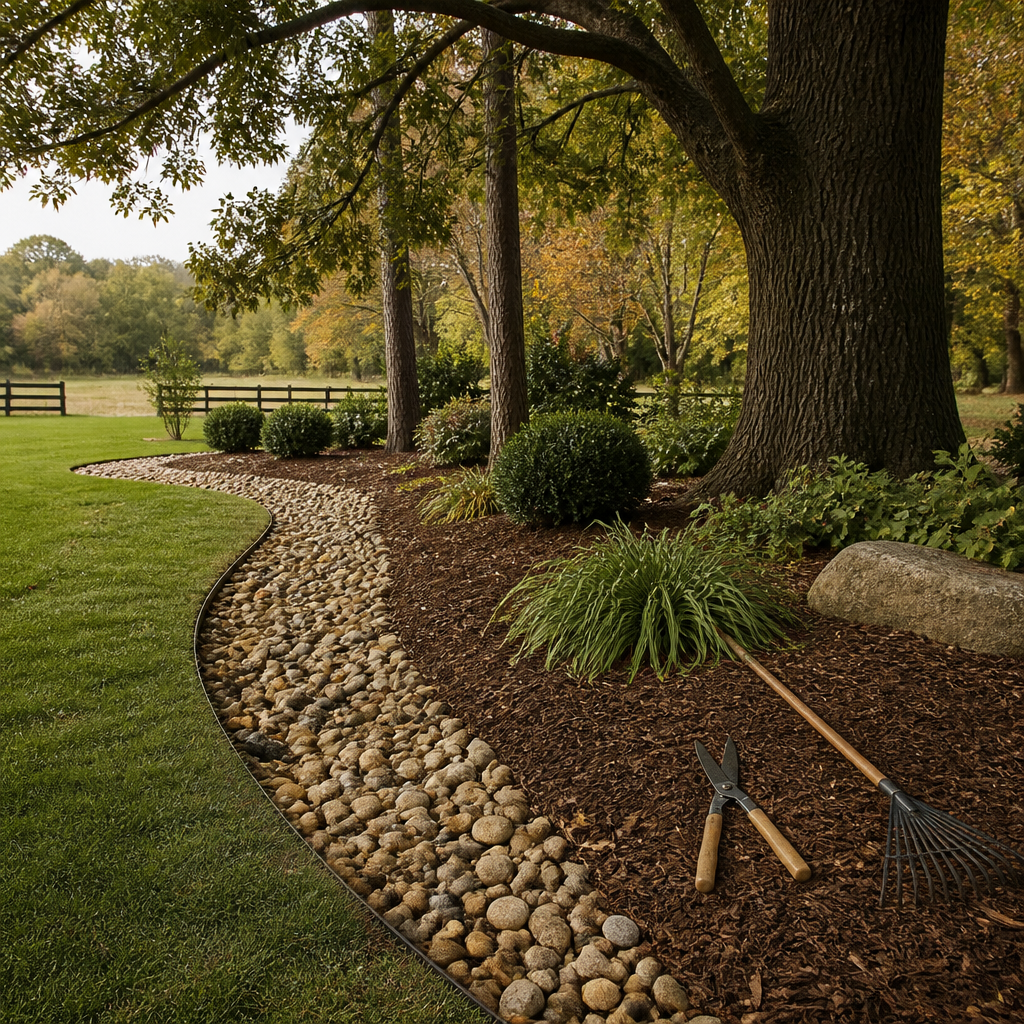
Early fall is the best window for most evergreen ground covers. Soil is still warm enough for roots to grow, and air temperatures are cool enough that plants lose less water through their leaves. Aim to finish planting before the first hard freeze forecast of the season.
Water deeply after planting, then keep the bed moist through dry spells until the ground cools. Shallow, frequent watering encourages weak roots, so give each plant a thorough soak every few days during dry weather.
Prep the Bed Before You Plant
Pull out dead annuals, remove weeds with roots intact, and loosen compacted soil to a depth that lets roots spread. Edge the bed cleanly so mulch stays inside the line. This prep takes a weekend and saves a spring of cleanup.
Pro tip: Mark your planting holes with a small stake before you dig, then check spacing from the sidewalk. Most beds look crowded in the first season, and a plan that looks right from the street is easier to fix than one that looks right only up close.
Common Mistakes That Ruin Winter Beds
Most failed winter beds share the same few errors. They are easy to avoid once you know what to look for, and they account for most of the spring replacement work we see.
Piling Mulch Against Stems
Mulch volcanoes around stems trap moisture and invite rot. Keep mulch a few inches away from the crown of each plant and spread it evenly over the bed. Pine straw is especially prone to clumping, so fluff it out after spreading.
Using Rock as a Planting Bed Surface
Rock looks clean at installation, but it turns a planting bed into a heat trap and makes it hard to add soil or mulch later. Save rock for edges and paths, and use living cover or wood mulch in the planting zone.
Pro tip: Before you buy a bag of pine straw or mulch, measure the bed in square feet and check the coverage on the bag. Under-buying is the most common reason a fall refresh stalls halfway through.
Frequently Asked Questions
Which cold tolerant ground cover works best for Alabama beds?
There is no single best plant. Bugleweed handles a wide range of light and soil conditions and stays green in colder zones, while candytuft suits warmer microclimates. Match the plant to the exposure in your bed before you buy.
Should I use pine straw or wood mulch in the fall?
Use pine straw on slopes and erosion-prone areas, and wood mulch on flat beds that need moisture retention. Expect pine straw to need yearly top-ups, while wood mulch breaks down more slowly.
When is the right time to plant ground cover before winter?
Early fall is the best window, with enough time for roots to establish before the first hard freeze. Plant before the coldest nights arrive, and water deeply through any dry spells that follow.
Can I use rock instead of mulch in a planting bed?
Rock is better suited to paths and hardscape edges. In a planting bed it does not improve the soil, it holds heat around plants, and it makes later soil and mulch work harder.
What ground cover works under mature trees in Alabama?
Shade-adapted options such as Southern Shield Fern do well in moist, acidic soil under trees. Keep planting shallow near roots, and check each species’ shade tolerance before buying in quantity.
Do I need professional help with a fall bed refresh?
Many homeowners handle small beds on their own. For larger beds, slopes, or areas with heavy tree roots, a professional crew can plan the layout, prep the soil, and set plants on a schedule that suits your yard. You can request a free quote through the Waters Edge Lawn Care website.
Have you tried a cold tolerant ground cover in your own Alabama bed, and what held up through the winter? Share your experience in the comments so other homeowners can learn from what worked for you.